Local Real Estate News, Market Trends & Homeowner Tips

Tired of confusing national headlines? Get the real truth about the Sacramento housing market right here! Our blog is updated regularly with boots-on-the-ground local news, shifting real estate trends, and insider tips you actually need. Whether you are tracking mortgage rates, hunting for hidden gems in Elk Grove, or preparing to sell for top dollar, I’ve got you covered. Bookmark this page to stay ahead of the competition!

March 26, 2026

How Can I Find the Right Real Estate Agent?

Real estate guide banner explaining how to find the right real estate agent to protect your home equity.

If you've ever said, "All real estate agents are the same," you might be putting your home equity at risk.

Think of it this way: Would you say all heart surgeons are the same? Of course not. You'd look for the one with the highest success rate, the most advanced technology, and a proven track record. Selling your home is one of the most significant "financial operations" of your life—it requires a specialist, not just someone with a license.

Here is the truth about finding the right partner to get your home sold for top dollar in today's market.

1. Beware the "Price-Buying" Trap

The biggest red flag in a listing appointment is an agent who immediately agrees to whatever price seller want without showing the hard market data.

Many agents "buy the listing" by promising an impossibly high sale price and the "lowest compensation" just to get you to sign. But ask yourself: If an agent can't even negotiate for themselves, how will they ever negotiate for your equity? A "cheap" agent often ends up being the most expensive mistake you'll ever make.

2. Marketing vs. "The Minimum"

Most agents follow the "3 P's": Put a sign in the yard, Post it on the MLS, and Pray.

In a competitive market like Sacramento, you need Target Marketing. Within the same office, you might find ten agents with ten completely different approaches. Some haven't invested a dollar in marketing in six months, while others (like my team) invest thousands into finding the specific buyer for your home.

3. We Find the Buyer Before They Find Us

Most owners forget the unique benefits of their home and focus only on square footage. We don't. We use a special criteria to select potential buyers based on:

  • Income & Career
  • Family Size (Essential for homes with large backyards)
  • Hobbies & Interests
  • Lifestyle Needs (Identifying multi-generational families for homes with in-law suites)

We don't just wait for people to find us on a website. We use custom postcards and direct mail to put your home physically in the hands of the people most likely to buy it. We target the buyer who needs your home's specific features, which is how we drive up the competition.

4. The "Success Rate" Interview

When you are interviewing agents, don't just ask about their last sale. Ask about their marketing investment.

  • The Question: "What specific type of target marketing—online and offline—will you use to reach buyers that aren't already looking online?"
  • The Answer you want: Look for an agent who can explain their "Target List" strategy and show you the custom physical marketing they've created for other homes.

The Blueprint for Maximizing Your Value

You deserve an agent who treats your home sale like a high-stakes operation. Don't settle for the "lowest bidder"—look for the agent who has the tools, the data, and the marketing budget to find your home's perfect match.

Ready to see how our Target Marketing strategy would look for your specific home? Let's talk. I'll show you the exact action plan that we would utilize to sell your home for top dollar.

Frequently Asked Questions About Choosing the Right Real Estate Agent

How do I choose the right real estate agent to sell my home?

To find the right real estate agent, look beyond standard licensing credentials and evaluate their specific marketing investments, target distribution networks, and localized pricing strategies. Avoid agents who immediately agree to unrealistic list prices without presenting empirical market data, and prioritize professionals who actively invest in data-driven target marketing campaigns.

What is a "price-buying" trap in real estate listings?

The price-buying trap occurs when a real estate agent intentionally overpromises an inflated selling value and offers discounted commission rates simply to secure a signed listing agreement. This tactic often results in prolonged days on the market, subsequent price drops, and weakened negotiating leverage for your home equity.

What is target marketing in residential real estate?

Target marketing moves beyond basic MLS listings by using specific demographic parameters—such as buyer income brackets, occupational clusters, household size, and lifestyle criteria—to match specialized properties with highly qualified buyers. This method combines direct mail, physical postcards, and localized online outreach to put your home in front of buyers looking for features like multi-generational in-law suites or large backyards.

What key question should I ask when interviewing a listing agent?

Always ask an agent: "What specific types of online and offline target marketing strategies will you deploy to reach prospective buyers who aren't already looking on standard public home search sites?" A professional listing agent should be able to produce examples of custom media, target client lists, and proactive distribution plans.

Posted in Homeowner Tips
March 25, 2026

Sacramento Real Estate Market Update: February 2026 Trends

Infographic titled "Sacramento Market Activity February, 2026" by real estate specialist Jasvir Josan, showcasing local housing trends against a background of modern, multi-story residential townhomes. A visual slider bar indicates the market type is firmly in a "Seller's Market." The graphic highlights four core real estate metrics alongside their month-over-month shifts: Months of Inventory is 2.1 (down 8.8%), List to Sold Price % is 98% (up 1%), Median Days in Market is 40 (down 16.7%), and Median Sold Price is $545,000 (up 1.1%). Professional contact info (510-493-8855, www.jasvirjosan.com, jasvir@jasvirjosan.com) and the Sacramento Association of REALTORS® source citation are listed along the bottom.

Spring is Arriving Early in Sacramento

As we shake off the winter chill and slide deeper into the first quarter, the Sacramento real estate market is heating up incredibly fast. If you've been keeping an eye on your local neighborhood, you might have already noticed that "Sold" signs are popping up much quicker than they were just a few weeks ago.

Our market data for February 2026 is officially locked in, and it confirms exactly what we're seeing on the ground: transaction velocity is gaining major steam, and buyers have heavily re-engaged. We are operating in a very firm, competitive Seller's Market. Let’s dive straight into the raw metrics to see what’s happening.

February 2026: By the Numbers

Fresh statistics from the local MLS highlight an accelerating landscape as we transition into the active spring cycle:

  • Market Type: We remain safely anchored in a highly active Seller's Market.
  • Median Sold Price: $545,000 - Home values registered a steady 1.1% increase month-over-month, showing solid stability across our local communities.
  • Median Days in Market: 40 Days - Homes are moving faster! The average marketing time dropped by a sharp 16.7% decline compared to January as seasonal buyer demand builds up.
  • List to Sold Price %: 98% - This metric moved upward by 1% from last month, proving that buyers are continuously offering very close to initial asking values.
  • Months of Inventory: 2.1 Months - Available supply tightened up by 8.8% month-over-month, meaning total available housing options are shrinking relative to high demand.

What These Trends Mean For You

The headline for February is a clear renewal in transactional momentum following the winter slowdown. With inventory shrinking back down below balanced-market thresholds, our local landscape remains tilted toward property owners.

For Sellers: The conditions couldn't be much better. With home values going up, market times shrinking, and buyers paying nearly 100% of your initial list price, your property is in incredibly high demand. If you've been considering making a move, right now is a fantastic window to maximize your hard-earned equity.

For Buyers: It’s a fast-paced environment out there, but do not let it discourage you. Because inventory levels remain tight and homes are selling quicker, you simply need to have your pre-approval locked in and be ready to act decisively when a quality property opens up. Entering negotiations with a solid offer strategy is more vital than ever.

Frequently Asked Questions (FAQs)

What is the current median home price in Sacramento?

As of February 2026, the median sold price for a home in Sacramento County is $545,000. This marks a steady 1.1% rise from January's median of $539,000, pointing toward stable pricing corrections as the spring market begins.

Is it a buyer's or seller's market in Sacramento?

Sacramento is firmly positioned in a Seller's Market. High consumer demand, declining time-on-market, and a restricted 2.1 months of inventory ensure that homeowners retain clear leverage over negotiations.

Are homes selling near asking price in Sacramento right now?

Yes. The average sold-to-original list price ratio climbed to 98% in February, which tells us that sellers are securing contracts very near their initial list numbers with minimal discount concessions.

How long does it take to sell a house in Sacramento?

Homes spent an average of 40 days on the market in February. This represents a significant 16.7% decrease in market time compared to the 47 days we tracked during the slower winter months of December and January.

Let’s Navigate the Spring Market Together!

Real estate metrics give us an amazing aerial view, but your neighborhood might be performing differently. Whether you’re looking to cash out on your home’s appreciating value or searching for a strategic way to purchase a home in this competitive climate, having an expert by your side makes all the difference.

Ready to maximize your opportunities this season? Let's connect today for a personalized strategy consultation and make your real estate goals a reality!

Posted in Market Updates
March 11, 2026

How Do I Prepare My Home for Sale? (The Sacramento Seller’s Strategy)

Before and after split-panel graphic demonstrating high-ROI home preparation strategies in the Sacramento real estate market.

I've seen it a hundred times: a homeowner spends $40,000 on a brand-new kitchen with marble floors and high-tech gadgets, thinking it will add $60,000 to their sale price. Then, they're heartbroken when the house sits on the market because the price is too high or the "luxury" choices didn't match the buyer's taste.

If you are selling in Sacramento right now—especially in that high-demand $500,000 range—you don't need a renovation crew. You need a strategy. In 2026, buyers aren't looking for a smart-fridge they can talk to; they are looking for low-maintenance living, dedicated office spaces, and a home that feels like a clean slate.

Here is exactly how I advise my clients to prep their homes for a top-dollar sale without wasting a dime on unnecessary upgrades.

1. The "Big Three" Psychology Moves

Before you pick out a single marble tile, focus on the psychology of the buyer. When someone walks through your front door, they are trying to "try on" your life. If they see your family photos or a bright purple wall, they feel like a guest in your home rather than the future owner of theirs.

  • Declutter mercilessly: If you haven't touched it in a year, pack it or donate it.
  • Neutralize the palette: A fresh coat of "Swiss Coffee" or a soft grey paint is the best return on investment you will ever get. It makes the house look brighter and smells "new."
  • Depersonalize: Remove the graduation photos and the fridge magnets. We want the buyer to see their own photos on those walls.

2. Focus on "The Vibe" (Low Maintenance is King)

In Sacramento, buyers are busy. They want a house that looks like it won't give them a headache. They are hunting for homes with in-law suites and dedicated offices, but more than anything, they want a home that has been maintained.

I always tell my sellers: Fix the small stuff. That leaky faucet in the guest bath or the loose door handle might seem minor to you, but to a buyer, it's a red flag that there might be bigger, hidden problems. Tighten the screws, fix the leaks, and make sure the carpets are either deep-cleaned or perfectly vacuumed.

3. My Secret Weapon: The "Go-Basket"

This is my favorite piece of advice for living in a house while it's on the market. We all know the stress of a last-minute showing request.

The Strategy: Keep a large "Go-Basket" (or a plastic bin) hidden in a closet. When a buyer is 15 minutes away, do a "sweep." Toss the mail, the phone chargers, the dog toys, and the dish soap into the basket. Put the basket in your car trunk and drive away. Your house looks like a model home in five minutes flat!

The "Power Week": Your 7-Day Prep Plan

If you're on a tight timeline and a budget, follow this schedule:

  • Day 1-2, The Purge: Declutter every room. Rent a small storage unit if needed.
  • Day 3-4, Paint & Touch-ups: Focus on the main living areas and any scuffed baseboards.
  • Day 5, The "Fix-It" Walkthrough: Repair leaky faucets, change lightbulbs, and fix hardware.
  • Day 6, Curb Appeal: Trim the bushes, mow the lawn, and add fresh mulch/flowers.
  • Day 7, Deep Clean: Windows, carpets, and a professional-level scrub of the kitchen.

Related: The Buyer's Dream: Your Guide to Irresistible Home Presentation

Preparing Your Home for a Top-Dollar Sale

Preparing your home for sale shouldn't feel like a second job. In our local market, buyers are looking for value and a home that feels "easy." By focusing on cleanliness, minor repairs, and smart staging like the Go-Basket, you'll position your home to stand out in our competitive market.

Thinking of hitting the market this spring? Let's grab coffee. I'll do a no obligation walkthrough of your home and tell you exactly what to fix (and what to ignore) to get the best price possible.

Frequently Asked Questions About Preparing a Sacramento Home for Sale

What updates bring the highest return on investment (ROI) when selling a house in Sacramento?

The highest ROI home improvements do not require major capital renovations. Minor cosmetic updates, such as decluttering, painting interior walls with neutral palettes like "Swiss Coffee," and optimizing exterior curb appeal, consistently net a greater financial return than expensive kitchen or bathroom structural overhauls.

How should I prepare my home for real estate showings while still living in it?

To keep your property show-ready on short notice, deploy the "Go-Basket" strategy. Keep a clean plastic bin hidden in an accessible closet to rapidly sweep up everyday clutter—like mail, phone chargers, and kitchen soap—allowing you to store the bin safely in your vehicle's trunk before buyers arrive.

Why is depersonalization critical when listing a property for sale?

Depersonalization removes psychological barriers for incoming home buyers. Removing personal items like family photographs, trophies, and refrigerator magnets allows prospective buyers to mentally place themselves and their own possessions inside the home, shifting their mindset from feeling like a guest to a future owner.

What features are Sacramento home buyers prioritizing right now?

Modern buyers look heavily for homes that feel exceptionally well-maintained, low-maintenance, and move-in ready. Dedicated home office spaces, layouts with in-law suites, functional yards, and clean mechanical hardware like faucets and fixtures rank incredibly high on buyer priority lists.

Posted in Homeowner Tips
Feb. 27, 2026

Selling Your Home is a Big Deal. It Shouldn't Be a Nightmare.

Split-screen graphic showing the contrast between a chaotic home sale and a calm, strategic home selling process.

Recent surveys show that nearly 40% of Americans rank selling a home as the most stressful event of modern life. They put it higher than going to a job interview, or even planning a wedding!

I see this panic all the time. A client will call me, completely overwhelmed by the thought of packing, repairing, and keeping their house constantly clean for strangers. I get it. Your home is your safe space, and putting it on display feels incredibly vulnerable.

But here is the honest truth from someone who navigates the real estate market every single day: the stress usually comes from a lack of a clear plan. When you break the home selling process down into manageable, bite-sized pieces, the anxiety melts away.

You absolutely can sell your home without losing your mind. Here is my straightforward strategy to help you prepare your house for sale and keep your sanity intact.

Tackle the "What Ifs" Before They Happen

The biggest source of anxiety for sellers is the unknown. What if the buyer's inspector finds black mold in the attic? What if the HVAC unit is on its last legs?

Instead of waiting for a buyer to find the flaws, take control of the narrative.

Book a Pre-Listing Inspection

Paying a few hundred dollars for an inspector to walk through your home before it hits the market is the best money you will ever spend.

Fix the Small Things Immediately

A leaky faucet or a loose cabinet hinge might seem like no big deal to you, but buyers see them as red flags. If they see deferred maintenance on the surface, they assume there are bigger hidden problems.

Disclose the Big Things

If your roof is 30 years old and you don't want to replace it, that is completely fine! We just price the home accordingly and disclose it upfront. No surprises means no stressful renegotiations later.

The "Laundry Basket" Decluttering Hack

You do not need to live in a sterile, museum-like environment while your home is on the market. That is an impossible standard, especially if you have kids or pets!

Instead of aiming for perfection, aim for easily manageable. Rent a storage unit for your bulky seasonal items and excessive family photos. Then, use the "laundry basket trick" for daily showings.

Keep an empty, attractive laundry basket tucked away in a closet. When you get a call that a buyer is coming in 30 minutes, you simply run through the house and toss in the mail, the dog toys, the phone chargers, and the random shoes. Throw the basket in the trunk of your car, wipe down the kitchen counters, and leave. It takes five minutes, and your house looks instantly staged.

Related: Top Tips for Selling Your Home for More Money

Price It For the Current Market, Not Your Emotions

One of the most stressful things you can experience as a seller is watching your house sit on the market for 60 days with no offers.

If you want to know how to sell your house fast and painlessly, it all comes down to pricing and marketing. Your home is worth what a buyer is willing to pay today, not what your neighbor's house sold for at the peak of the 2021 craziness. If we price your home aggressively and market it the right way from day one, we can generate immediate interest. That excitement often results in multiple offers, giving you the upper hand to set the terms, pick the ideal closing date, and navigate smoothly through escrow.

Let Go of the Wheel

You are hiring a professional for a reason. My role goes beyond just sticking a sign in your yard. I'm here to be your shield. I take care of those late-night messages from pushy buyers, negotiate any repair requests, and ensure that the lender is on top of their game so we can close without a hitch. Your only responsibility? Keep the house looking great and start dreaming about your next adventure.

Selling your home is a big change, but it doesn't have to be a stressful one. With the right prep and a solid team by your side, you can actually find joy in the journey!

Are you thinking about making a move this year but feeling overwhelmed by where to start? I'd love to take the weight off your shoulders. Reach out today for a quick, 15-minute chat—we can walk through your home together (virtually or in person) and build a custom, stress-free plan to get you to your next chapter!

Frequently Asked Questions About Selling Your House Without Stress

How can I reduce anxiety and stress when selling my home?

Reducing home-selling stress requires establishing a structured timeline and eliminating unexpected variables. Booking a pre-listing inspection lets you uncover property issues early, while decluttering living zones keeps the home manageable. Partnering with a reliable real estate agent shifts the administrative, negotiation, and scheduling burdens off your shoulders.

What is the laundry basket trick for real estate showings?

The laundry basket trick is a quick staging hack used to handle short-notice home viewings. Keep a clean, empty laundry basket in a closet, and spend 5 minutes sweeping up daily items like device chargers, mail, and pet toys before an appointment. Stash the basket out of sight in your vehicle's trunk so your home looks instantly pristine for buyers.

Why should I consider booking a pre-listing home inspection?

A pre-listing inspection lets you take charge of the property narrative before buyers get involved. Identifying repair needs early gives you the flexibility to fix them on your own terms or disclose them transparently upfront. This removes the risk of buyers discovering major issues later, which often leads to stressful, last-minute price reductions during escrow.

How does accurate market pricing help me sell my house fast?

Pricing your home based on current hyper-local data rather than personal emotion ensures your listing captures high buyer engagement during its first two weeks on the market. Strategic pricing prevents a property from sitting stale, drives buyer urgency, and regularly cultivates multiple offers that let you control the closing terms.

Posted in Homeowner Tips
Feb. 25, 2026

Sacramento Housing Market Update: What January 2026 Means for You

Infographic showing Sacramento housing market trends for January 2026 by Jasvir Josan. Key winter statistics reveal a median sold price of $539,000, 2.4 months of inventory, a 97% list-to-sold price ratio, and an average of 47 days on market.

Navigating the New Year in Sacramento Real Estate

Welcome to 2026! As we kick off the first quarter of the year, the Sacramento housing market is already delivering some incredibly interesting insights. While the winter season typically brings a slower pace to transaction volume, the latest numbers suggest that underlying home values are holding remarkably steady, even as local supply begins to expand.

Understanding these shifts is absolutely vital to making a confident, profitable move—whether you are looking to timing the sale of your current property perfectly or secure your next dream home in the Sacramento area.

January 2026: The Numbers You Need to Know

Fresh data reveals how our local market transitioned from the holidays into the new year. Here is exactly how we started January:

  • Median Sold Price: $539,000. Home values saw a healthy 1.1% increase month-over-month, proving that local home equity remains strong and resilient despite seasonal shifts.
  • Months of Inventory: 2.4 Months. We experienced a significant 49.7% surge in available supply compared to last month. While this offers more options for house hunters, total inventory still sits safely below the balanced 3-month threshold.
  • List to Sold Price %: 97%. Ticking down by 1.0% from December, this metric highlights a slightly more cooperative negotiating environment between buyers and homeowners.
  • Median Days on Market: 47 Days. Time-to-sale held completely unchanged at 0% growth month-over-month, matching the steady winter pace we expect during the colder months.

The Winter Transition: Market Analysis

The headline story for January is the dual rise of both median home prices and available inventory. Sinking under the 3-month supply mark keeps the broader Sacramento region resting in seller territory, but the landscape is shifting in a way that creates unique windows of opportunity on both sides of the closing table.

For buyers, this is your cue to re-enter the market with confidence. A near 50% increase in inventory means you finally have more homes to browse, and a stable 47 days on market means you have more time to breathe, analyze options, and negotiate terms without the immediate pressure of crazy bidding wars.

For sellers, pricing strategy is your ultimate key to success. Because buyers have slightly more choices and are averaging a 97% contract-to-list ratio, properties that are polished, staged, and accurately aligned with current neighborhood valuations will capture the highest concentration of serious, pre-approved buyers.

Frequently Asked Questions (FAQs)

What is the current median home price in Sacramento?

As of January 2026, the median sold price for a home in Sacramento County is $539,000. This represents a solid 1.1% gain from December, indicating stable upward momentum for property values going into the first quarter.

Is it a buyer's or seller's market in Sacramento right now?

The Sacramento market remains a Seller's Market, though it is showing signs of healthy moderation. With 2.4 months of closed sales inventory, current supply is still restricted enough relative to buyer demand to work in the seller’s favor.

Are buyers getting discounts on asking prices in Sacramento?

Slightly. On average, the list-to-sold price ratio is resting at 97%. This indicates that buyers are successfully negotiating minor discounts of around 3% from original list prices across current active transactions.

How long does a home stay on the market in Sacramento?

Properties averaged 47 days on the market in January. This pace is completely identical to December’s numbers, showing a reliable and uniform transactional speed for the mid-winter season.

Let’s Plan Your 2026 Real Estate Strategy

The Sacramento market is constantly evolving, and having a local expert to guide you through the raw numbers makes all the difference. Whether you want a highly detailed, personalized valuation of your home's equity today or need a tactical partner to map out your upcoming purchase, I am here to provide the local data and negotiation expertise you deserve.

Ready to hit your real estate goals this year? Contact us today for a personalized consultation, and let's get your strategic game plan started!

Posted in Market Updates
Feb. 18, 2026

From Insult to Opportunity: The Strategic Seller's Guide to Winning with Lowball Offers

How to Respond to a Lowball Offer - Sacramento Home Selling Guide and Negotiation Tips

Don't Let It Offend You: How to Respond to a Lowball Offer strategically

You’ve put weeks of hard work into preparing your home for sale. The landscaping is pristine, the staging is immaculate, and you are incredibly proud of your listing. When your real estate agent calls to announce that the first offer has officially landed, your heart races with anticipation—until you see the final number. It is tens of thousands of dollars below your asking price, and you instantly feel a sting of frustration. That is a classic lowball offer, and it can easily feel like a direct, personal insult.

While your initial emotional reaction might be to get angry and reject it outright, letting emotion guide your pen is the costliest mistake a seller can make. Moving through mid-2026, the Sacramento housing market remains heavily inventory-constrained with only a 2.3-month supply of homes. Because available listings are so tight, serious buyers are often testing the waters with lower opening numbers to gauge a seller's motivation before committing to their highest price point. The smartest, most profitable way to handle a lowball offer is to strip away the emotion, view it strictly as a business transaction, and treat it as a live opening to a successful negotiation.

Here is your comprehensive strategic blueprint on how to turn a lowball offer into a high-dollar closing.

1. Take a Breath and Separate Pride from Pocketbook

First and foremost, take a step back and look at the big picture. An offer, regardless of how low the initial dollar amount seems, is an explicit, legally binding expression of interest. The buyer likes your layout, your location, and your property enough to put paperwork on the table. A buyer’s low opening bid is not a personal judgment on your lifestyle or your home's intrinsic worth—it is simply their opening salvo in a financial negotiation. A calm, calculated, and professional response is your absolute most powerful leverage tool.

2. Never Reject an Offer Outright — Always Send a Counter

One of the single greatest errors a homeowner can make is to flat-out ignore or summarily reject a low offer out of spite. Doing this immediately slams the door on all communication and completely kills the deal. Remember, many buyers who start with a lowball offer are fully prepared to come up significantly in price once they realize the seller isn't going to budge. Even if you are miles apart on the initial numbers, sending back a professional counteroffer keeps the dialogue moving forward and signals that you are ready to do business at a realistic price point.

3. Analyze the Full Package Beyond the Purchase Price

The headline price point is only a single component of a purchase contract. A sophisticated seller looks at the net value of the entire terms sheet. When an offer lands, have your local real estate agent dissect the fine print for hidden financial advantages. Ask yourself if the buyer is offering terms such as:

  • An All-Cash Transaction? Eliminating the traditional mortgage approval process means a substantially faster, highly certain closing timeline with zero financing contingencies.
  • An Accelerated Closing Calendar? Getting out of the home in 14 days instead of 45 can save you thousands of dollars in carrying costs, double mortgage payments, and property taxes.
  • Waived Contingencies? A buyer who chooses to waive their appraisal contingency or structural home inspection contingency is offering you an incredibly secure, low-risk transaction that is highly unlikely to fall out of escrow.

Often, a slightly lower sales price coupled with clean, rock-solid terms can actually net you more security and peace of mind than a higher price burdened by a mountain of unpredictable conditions.

4. Counter with Inflexible Confidence and Real-Time Data

When you prepare your counteroffer, let the local market facts do the talking, not your personal feelings. Your real estate professional will be your main asset during this phase:

  • Weaponize the Comps: Back up your counter price using a bulletproof Comparative Market Analysis (CMA). Have your listing agent send over the most recent closed sales data from your immediate neighborhood directly to the buyer's agent to prove your home is priced accurately for the current market.
  • Accentuate Premium Upgrades: Force the buyer to acknowledge your home's unique selling points and structural investments. If you have recently installed energy-efficient windows, a pristine architectural roof, or custom backyard landscaping, highlight these assets to validate your number.
  • Stand Firm Favorably: If the buyer’s initial offer is absurdly low, your first counterpoint doesn't have to be a massive concession. Countering just $1,000 below your original list price signals to the buyer that you understand your home's true value and will not tolerate predatory bids.

5. Leverage the Strategic Armor of a Seasoned Listing Agent

Your real estate agent is your primary shield and negotiator when managing incoming offers. A skilled local professional provides three critical advantages:

  • Dispassionate Representation: They act as a vital buffer, executing all communications with the buying party in a highly professional manner to keep negotiations on track.
  • Live Market Insights: They track real-time Sacramento housing market trends day-by-day, ensuring your position is constantly backed by indisputable transaction data.
  • Uncovering Buyer Motivation: Through targeted, agent-to-agent dialogue, they can uncover why the buyer bid low—whether they are simply trying to score a deal or if they are working with a tight pre-approval ceiling.

Frequently Asked Questions About Negotiating Sacramento Real Estate

What is the current median home price in Sacramento?

As of mid-2026, the median sold price for a single-family home in Sacramento stands at $561,000. This represents a healthy 2.6% month-over-month growth vector, signaling that buyer demand remains incredibly robust across the valley floor despite macroeconomic shifts.

How long do I have to wait for a better offer if I receive a lowball?

With Sacramento listings spending a median of just 26 days on the market before going under contract, you don't have to panic. If your property has been active for less than two weeks and you receive a lowball offer, you hold significant leverage to counter firmly or wait for a cleaner bid from the next weekend's open house foot traffic.

Should I accept an all-cash offer if it is lower than my list price?

It depends entirely on your personal moving goals and financial requirements. All-cash offers typically carry a 95%+ closing success rate because they eliminate bank appraisals and underwriting guidelines. In the 2026 market, sellers frequently accept cash offers that are 2% to 4% below list price simply to secure a guaranteed, hassle-free close.


The Bottom Line: A lowball offer isn't a dead end—it is a live opening to a successful conversation. By maintaining emotional discipline, utilizing real-time regional statistics, and working hand-in-hand with an elite negotiator, you can seamlessly convert a low opening bid into a highly lucrative closing statement. If you are ready to list your home with a team that knows exactly how to field, counter, and maximize every single offer on the table, contact our office today to get started!

Posted in Homeowner Tips
Feb. 11, 2026

Fixed-Rate vs. Adjustable-Rate Mortgages: What’s the Difference?

Fixed-Rate vs. Adjustable-Rate Mortgages: What’s the Difference?

“More than 90% of U.S. homebuyers choose fixed-rate mortgages.” While that national statistic highlights a massive preference for consistency, it absolutely does not mean a fixed rate is the default best path for your personal financial timeline.

If you are actively preparing to buy a home or exploring real estate across Sacramento and browsing homes for sale in Elk Grove, understanding your exact financing architecture is paramount. Fixed-rate options and adjustable-rate mortgages (ARMs) operate under entirely different rulebooks, each presenting unique financial trade-offs. Let's break down how these mechanisms compare in plain English so you can navigate your pre-approval with total confidence.

The Predetermined Path: Fixed-Rate Mortgages

Think of a fixed-rate mortgage as the baseline foundation of the housing industry. It is straightforward, highly predictable, and completely immune to external market chaos. Whether you opt for a standard 15-year or 30-year fixed-rate program, your underlying contractual interest rate remains locked in stone from your first payment to your very last.

If you secure your loan at a 6.5% interest rate today, you will still be paying that exact same 6.5% decades from now, even if macro-economic pressures cause nationwide mortgage averages to spike significantly higher.

Why Local Buyers Choose Fixed Rates:

  • Absolute Cost Certainty: Your core monthly principal and interest payment will never change. This allows you to construct long-term family budgets with complete piece of mind.
  • Built-In Inflation Protection: As inflation naturally pushes up the cost of everyday consumer goods over the next ten to twenty years, your locked-in housing payment remains same, effectively feeling smaller relative to your growing career income.
  • Total Simplicity: There are no complex financial indexes to track, no "teaser periods" to manage, and zero calculation surprises down the road.

The Strategic Trade-Off: You typically pay a premium for this long-term protection. Fixed interest rates are generally structured slightly higher than the introductory phases of an ARM because the lending institution is absorbing 100% of the long-term market volatility risk.

The Tactical Maneuver: Adjustable-Rate Mortgages (ARMs)

An adjustable-rate mortgage is a hybrid loan that requires a more deliberate, short-term holding strategy. These programs split your loan timeline into two distinct segments: an initial fixed introductory window (frequently lasting 5, 7, or 10 years) followed by an adjustment phase where your interest rate recalibrates periodically based on prevailing financial benchmarks, like the Secured Overnight Financing Rate (SOFR).

For example, if you opt for a 7/1 ARM, your interest rate is locked for the first 7 years of ownership. Once year 8 arrives, your rate will adjust exactly once per year for the remainder of the loan term, moving up or down within strict pre-arranged contractual safety caps.

Why Local Buyers Choose ARMs:

  • Enhanced Initial Cash Flow: In the current 2026 mortgage landscape, an introductory ARM rate can sit lower than a standard 30-year fixed product. This spread can translate directly into hundreds of dollars in monthly cash flow savings during those early years of homeownership.
  • Perfect for Short-Term Horizons: If your professional trajectory or growing family structure means you will likely sell or upgrade your home within 5 to 7 years, paying a premium for a 30-year fixed rate makes little financial sense. An ARM lets you capitalize on maximum affordability during your exact window of occupancy.
  • Accelerated Principal Reduction: Enjoying a lower initial interest rate during the introductory phase means a larger portion of your aggregate monthly payment goes straight toward carving down your actual principal debt balance early on.

The Strategic Trade-Off: Rate uncertainty. If larger economic indicators trend upward and you remain in the property past your introductory timeline, your monthly payment could increase noticeably once the annual adjustment intervals trigger.

Related: Strategic Analysis: Should You Wait for Lower Rates to Buy a Sacramento House?

Evaluating Your Best Framework in Today's Market

In modern real estate transactions, there is no single "perfect" loan program—only the program that aligns correctly with your personal balance sheet and structural timeline.

A Fixed-Rate Loan is Best If:

  • You are moving into your long-term "forever home" and plan to raise a family or settle into retirement there over the next 15 to 30 years.
  • Your monthly household budget operates within narrow boundaries, and your peace of mind depends on knowing your housing costs will never fluctuate.
  • You favor long-term predictability over short-term upfront cash savings.

An Adjustable-Rate Mortgage (ARM) is Best If:

  • You are purchasing a strategic "starter home" or a transitional property and are highly confident you will sell or relocate before the fixed introductory phase expires.
  • You anticipate a definitive, substantial bump in personal income in the near future (e.g., corporate promotions, corporate relocation tracks, or completing advanced medical residencies) to easily manage any future adjustment scenarios.
  • You have the financial discipline to redirect your upfront monthly payment savings straight into high-yield investments or principal loan pay-downs.

Aligning Your Long-Term Financial Engine

Your mortgage structure serves as the primary engine driving your entire real estate investment. Rather than defaulting to a standard 30-year fixed timeline simply because it is the path your family or peers historically utilized, evaluate your actual residency timeline, look closely at your savings milestones, and map your financing to your true lifestyle goals.

Unsure which rate structure maximizes your purchasing power in the current market? To explore the full spectrum of competitive conventional and government-backed options, review our updated guide to understanding different mortgage types, or reach out to our local team today. We will connect you directly with premier Northern California mortgage specialists who can run a customized total cost analysis tailored entirely to your future success.

Frequently Asked Questions About Fixed vs. Adjustable Mortgage Rates

What do the numbers in a 5/1 or 7/1 ARM mortgage actually mean?

The first number represents the initial timeline (in years) where your introductory interest rate is completely fixed and cannot change. The second number indicates how frequently (in years) your interest rate will adjust after that introductory period expires. For instance, a 7/1 ARM stays fixed for the first seven years and then adjusts exactly once every year based on current financial indexes.

Are there caps to limit how high an adjustable-rate mortgage can go?

Yes. Modern adjustable-rate mortgages feature strict built-in interest rate caps to protect consumers from extreme market shifts. These include an initial cap (limiting the first rate change), a periodic cap (limiting the maximum change from one adjustment period to the next), and a lifetime cap (establishing the absolute highest interest rate you can ever experience over the duration of the loan).

Can I switch from an adjustable-rate mortgage to a fixed-rate mortgage later?

Yes. If you currently hold an ARM and want to secure the permanent stability of a fixed loan, you can choose to refinance your mortgage into a conventional fixed-rate loan at any time, provided you meet standard lending criteria like credit minimums, debt-to-income limits, and sufficient home equity.

Feb. 10, 2026

Best Neighborhoods in Stockton CA: Top Places to Live

Top Neighborhoods in Stockton CA - Comprehensive Guide to the Best Residential Communities in San Joaquin County

Stockton is officially undergoing a massive structural transformation. Moving through 2026, the local population has officially climbed past 325,000 residents as more people discover the incredible value hidden right in the heart of the Central Valley. Whether you are looking for serene Delta waterfront properties, a lively college town atmosphere, or a quiet suburban subdivision, there is an ideal area here built for your budget. I have helped dozens of families successfully relocate to Stockton, and the biggest hurdle isn't finding a great piece of real estate—it is navigating the distinct subcultures of each individual neighborhood grid.

The local real estate landscape covers a massive spread, stretching from highly affordable starter homes to multi-million dollar country club properties. Let's break down the best places to live across the city, grouped by exactly how they match up with your daily lifestyle requirements.

The Best Neighborhoods in Stockton CA by Lifestyle

Finding your perfect fit means aligning your housing search with your specific lifestyle priorities. Let's look closely at Stockton's top residential developments and how they operate on a daily basis.

Master-Planned and Secure Gated Communities

  • Brookside: This development stands undisputed as Stockton's premier prosperous luxury hub. Widely celebrated for its private championship golf course and prestigious country club, Brookside delivers spectacular custom estates, top-tier school options, and a highly protective 2026 security layout.
  • Spanos Park (East & West): A massive, highly desirable master-planned development positioned in North Stockton. Divided by the freeway corridor, this area is highly coveted by expanding families for its modern architectural designs, beautifully kept public parks, and proximity to major retail centers.
  • Westlake Villages: Anchored around gorgeous, expansive man-made lakes, this master-planned pocket provides an incredibly peaceful lifestyle. It features beautiful contemporary single-family designs and peaceful community walking paths.

Waterfront Enclaves and Scenic Delta Gems

  • Lincoln Village West: This pocket remains a primary choice for premium waterfront living. It is highly valued for its tranquil tree-shaded lanes, quick access to private marinas, and immediate proximity to the premier boutique shops and dining at Lincoln Center.
  • Lakeview: True to its name, Lakeview offers quiet residential living defined by scenic water views and established architectural styles. It is an ideal option for buyers wanting a slower-paced environment that remains well-connected to local resources.

Suburban Neighborhoods with Family Appeal

  • Morada: Tucked away on the northeastern fringe of the municipality, Morada features an upscale rural-suburban blend. Buyers come here for the massive custom ranches, large lot footprints, and agricultural quietude that is rare to find near major cities.
  • Bear Creek: A highly active, stable residential corridor featuring highly competitive newer-construction homes and an exceptionally friendly neighborly vibe.
  • Valley Oak: Incredibly popular among families raising school-aged children, Valley Oak balances highly accessible property values with close proximity to neighborhood school campuses and commercial centers.
  • Stonewood & Sherwoods Manor: These mature, beautifully tree-canopied communities are filled with traditional mid-century layouts and sprawling, pride-of-ownership lawns.

Walkable Districts and Urban Lifestyles

  • Pacific: Positioned squarely around the historic University of the Pacific, this artistic neighborhood is heavily populated by young professionals and educators. It offers an energetic vibe with quick access to the local cafes along the Miracle Mile.
  • Country Club: An established neighborhood showcasing a diverse array of classic properties, offering quick access to local dining hubs and the San Joaquin River channels.
  • Civic Center & Downtown: The true metropolitan center of the region. This area features contemporary urban loft living options situated within walking distance of central business buildings, minor-league sports venues, and waterfront dining spaces.

Value-Focused and Emerging Neighborhoods

  • Weston Ranch: A large, modern master-planned subdivision positioned in South Stockton. It stands as an important affordability anchor for the region, providing modern single-family layouts at highly competitive price tags.
  • French Camp: Positioned along the southern boundary line, French Camp offers a distinctly historic, semi-rural environment while keeping residents minutes from regional healthcare centers and major transit links.
  • Garden Acres & East Stockton: Renowned for offering highly competitive real estate values, these communities serve as excellent options for investors or buyers seeking to customize a home.
  • August, Kennedy, Taft Mosswood, & Seaport: Foundational residential corridors providing dynamic, highly accessible entry-level properties positioned close to major industrial employment zones.

Navigating the 2026 Stockton Real Estate Market

The 2026 Stockton housing market has settled into a highly balanced, sustainable rhythm. The citywide median sales price is holding steady right around $435,000, representing a healthy 3.6% increase year-over-year. Unlike the chaotic bidding environments of years past, the current median time on market is hovering around 45 to 52 days. This is incredible news for buyers, as it means you finally have the room to tour homes, complete proper home inspections, and negotiate equitable terms.

However, because Stockton neighborhoods fluctuate significantly from block to block, partnering with a dedicated local expert is essential. If you commute daily toward the Bay Area, prioritizing western subdivisions like Brookside or Spanos Park can save you hours on the Interstate 5 corridor. Additionally, make sure to factor in specific master-planned HOA fees and localized school districts into your long-term financial calculations before locking in your purchase.

Frequently Asked Questions About Living in Stockton CA

What is the median home price in Stockton CA for 2026?

The current median home price across the Stockton market is roughly $435,000. However, the region features one of the widest price variances in the Central Valley, with options starting under $350,000 in central commuter zones and stretching over $1,000,000+ for custom luxury estates inside Brookside.

Which Stockton neighborhoods are closest to the Bay Area commute?

Subdivisions located along the western side of the city—specifically Weston Ranch, Brookside, and Lincoln Village West—provide the fastest, most direct access to the Interstate 5 and Highway 4 commuter corridors, making them highly attractive for professionals traveling toward the Bay Area.

Are there high-performing school options within Stockton?

Yes, Stockton features several excellent public, charter, and private institutions. Pockets like Lincoln Village West and Brookside sit within the highly regarded Lincoln Unified School District, while other northern master-planned developments afford access to highly rated schools in the Lodi Unified boundaries.

Aligning your real estate goals with a community that secures your long-term equity takes hyper-local data and strategic planning. If you are ready to explore the Stockton market with a tailored approach, reach out today and let's find the perfect property for your lifestyle!

Posted in Neighborhood Info
Jan. 28, 2026

Historical Mortgage Rates: How Rates Have Changed Over the Years

Historical mortgage rates chart comparing average 30-year fixed interest rates by decade from 1970 to 2026.

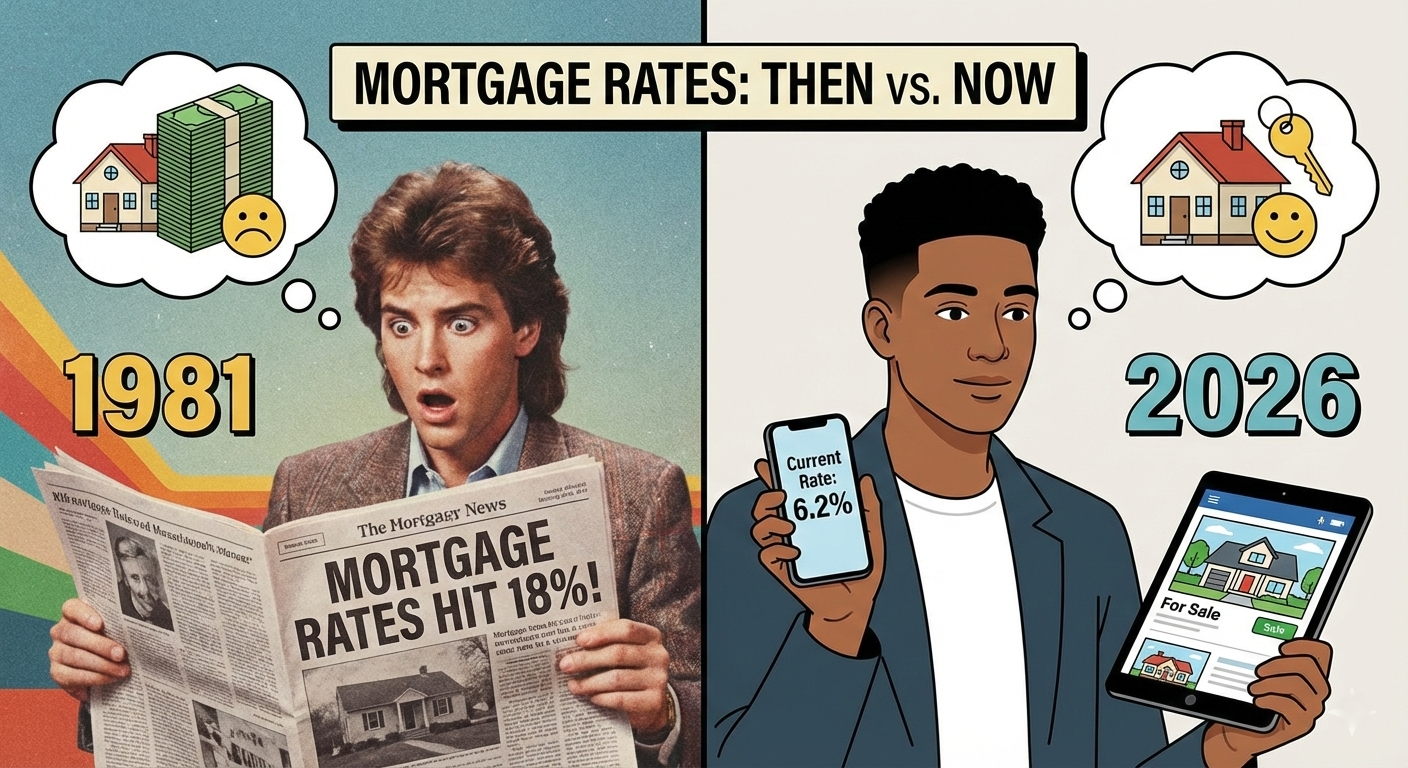
Imagine walking into a bank to apply for a mortgage, and the loan officer smiles and says, "Good news! We can lock you in at 18.6%."

You would probably laugh. Or cry. Or maybe just walk out. But if you were buying a house in October 1981, that was the reality. I talk to so many buyers in Sacramento who feel discouraged by today's rates in the 6% range. I get it. We all remember 2021. But when you zoom out and look at the big picture, the story changes completely.

We aren't in a crisis. We are just back to normal.

The "Good Old Days" (That Were Actually Terrible)

If you ask your parents or grandparents about their first home, they might tell you they bought it for $80,000. Sounds amazing, right? But they likely paid double-digit interest rates to get it.

The 1970s Economic Shift

The decade started in the reasonable 7s but ended in chaos. By 1979, inflation pushed rates to nearly 12.9%.

The 1980s Shock

This is the era that gives economists nightmares. In 1981, the average 30-year fixed rate hit an all-time high of 18.63%.

The Reality Check: A $200,000 loan at 18% interest costs $3,000 a month in interest alone. At today's 6%, that same loan costs about $1,000 in interest.

The Slow Slide Down (1990s—2010s)

After the wild ride of the 80s, things started to calm down.

The 90s saw rates drift from 10% down to 7%. Then came the 2000s and the housing crash, which pushed rates even lower, hovering between 5% and 6% for years. This is actually very similar to where we are sitting right now in January 2026!

Then came the 2010s. We got spoiled. Rates dipped into the 3% and 4% range, and a generation of buyers (maybe you!) started to believe that was the permanent standard.

The Unicorn Years: 2020—2021

This is the anomaly that messed with everyone's heads.

During the pandemic, the Fed slashed rates to keep the economy alive. We saw record lows of 2.65% in January 2021. It was essentially "free money." But here is the hard truth: That was a once-in-a-lifetime emergency event. Waiting for 2.65% to come back is like waiting to win the lottery. It might happen, but you probably shouldn't plan your financial future around it.

The 2026 Reality: Welcome to "Normal"

So, where does that leave us today?

As of early 2026, we are sitting comfortably in the low-to-mid 6s. And you know what? That is a healthy market!

  • Inventory is up.
  • Bidding wars are down.
  • Buyers have power again.

When rates were 3%, you had to waive your inspection and pay $50,000 over asking just to get a call back. Today, you pay a little more in interest, but you get to keep your inspection contingency and actually negotiate the price.

What Should You Do?

Stop trying to time the market. You will likely miss it. Instead, focus on affordability.

  • Date the Rate, Marry the House: I know it's a cliché, but it's true. If rates drop to 5% in 2027, you can refinance and lower your payment. But if you wait until 2027 to buy, home prices will likely be higher.
  • Focus on the Payment, Not the Percentage: Ask your lender for a "Total Cost of Analysis." Sometimes a slightly higher rate on a home with a lower purchase price is actually cheaper long-term than a low rate on an overpriced bidding-war home.
  • Run the Historical Math: Ask yourself—would you rather pay 6% on a $500,000 house today, or 5.5% on that same house when it costs $550,000 next year? The math almost always favors buying now.

Historical Real Estate Trends & Wealth Building

History teaches us that rates fluctuate, but real estate values over time almost always go up. Don't let a few percentage points scare you out of building wealth. The buyers in 1981 didn't stop buying; they just refinanced when rates dropped. You can do the same.

Curious how a 6% rate compares to your current rent payment? Drop me a message or comment below. Let's run the numbers for your favorite Sacramento zip code.

Frequently Asked Questions About Historical Mortgage Rates

Are current mortgage rates considered high historically?

No, current mortgage interest rates sitting in the low-to-mid 6% range are aligned perfectly with long-term historical norms. While significantly higher than the pandemic-era lows of 2% to 3% seen in 2020 and 2021, current rates mirror the stable baseline patterns observed across the 2000s and are vastly below the double-digit trends of the 1970s and 1980s.

What was the highest average mortgage interest rate in U.S. history?

The highest historical average for a standard 30-year fixed-rate mortgage occurred in October 1981, topping out at an all-time high of 18.63%. During this economic era, financing a home cost nearly triple the amount of monthly interest fees compared to real estate assets purchased under contemporary market structures.

Should I wait for mortgage rates to drop back to 3% before buying a home?

Waiting for interest rates to hit 3% is not recommended by real estate professionals. The 2020-2021 record lows of 2.65% were emergency anomalies caused by global financial intervention. Delaying a home purchase waiting for those metrics to reappear often costs more in long-term equity growth as home values steadily compound higher over time.

What does the phrase "date the rate, marry the house" mean?

This industry philosophy highlights that a home's physical location and purchase price are permanent variables ("the marriage"), while your mortgage interest rate is temporary ("the date"). Buying a preferred home today allows you to establish long-term equity, with the flexibility to have a rate refinance down the line if market rates decrease.

Jan. 28, 2026

Sacramento Real Estate: December 2025 Market Update & 2026 Outlook

sacramento real estate market, sacramento housing market, sacramento market update, sacramento real estate trends december 2025, sacramento real estate, sacramento homes for sale, sacramento home prices, average home price sacramento, sell my home sacramento, what is my home worth sacramento?, best time to sell in sacramento, how to sell my house fast sacramento, home value sacramento

A Strong Close to 2025: What the Numbers Tell Us

Happy New Year! As we step into 2026, it’s the perfect time to reflect on how the Sacramento housing market closed out the previous year. December is often a month of transition, and the latest data reveals a market that remains resilient, even as seasonal shifts take hold.

The end of 2025 was characterized by tightening inventory and steady pricing, signaling that while the "frenzy" of previous years has leveled off, the demand for quality homes in our region remains high.

December 2025: By the Numbers

According to the latest data, here is a snapshot of the Sacramento market’s performance:

  • Median Sold Price: $535,000 - We noticed a small increase of 0.66% from last month. Even with all the discussions about the economy, home values in Sacramento are staying strong and even showing a bit of growth.
  • Months of Inventory: 1.45 - Months Supply dropped significantly by 27.86% compared to last month. This indicates a very tight seller's market; Just to give some context, a "balanced" market usually has around 4 to 6 months of inventory..
  • List to Sold Price %: 99.2% - The market is holding steady with just a slight dip of 0.32%. Sellers are still getting close to their asking prices, which indicates that buyers are ready to invest in homes that are priced right and move-in ready.
  • Median Days in Market: 31 Days - Homes are spending about a month on the market—a 29.17% increase in time. This is a typical seasonal trend as holiday schedules often slow down the closing process.

What This Means for You in 2026

  • For Sellers: The decrease in inventory is actually your greatest advantage right now. With less than 1.5 months of supply on the market, your home is really going to stand out. If you've been holding off for "the perfect moment," the current lack of competition makes this an ideal time to list your property.
  • For Buyers: Even though inventory is on the lower side, the rise in "Days on Market" indicates that you might have a bit more wiggle room to negotiate compared to the summer highs. With prices holding steady, you can approach your budget with greater confidence as you head into the 2026 market.

Let’s Navigate the 2026 Market Together

Whether you are planning to sell your long-time family home or are ready to find your first house in the Sacramento area, having the right data is only half the battle—you also need a strategy.

Ready to see what your home is worth in today’s market? Reach out today to get a custom market analysis tailored to your specific neighborhood.

Posted in Market Updates