Local Real Estate News, Market Trends & Homeowner Tips

Tired of confusing national headlines? Get the real truth about the Sacramento housing market right here! Our blog is updated regularly with boots-on-the-ground local news, shifting real estate trends, and insider tips you actually need. Whether you are tracking mortgage rates, hunting for hidden gems in Elk Grove, or preparing to sell for top dollar, I’ve got you covered. Bookmark this page to stay ahead of the competition!

May 8, 2025

Appraisal vs. Inspection: What's the Difference and Why Do You Need Both?

Navigating the escrow process when buying a home in Northern California comes with a steep learning curve. Two steps that frequently cause confusion for both buyers and sellers are the home appraisal and the home inspection. While they often happen around the exact same time in the transaction, they serve entirely different masters and protect completely different financial assets. Let's break down the mechanics of each so you can protect your cash and your contract timelines.

What is a Home Appraisal?

A home appraisal is an unbiased, professional estimate of a property's current market value conducted by a state-licensed appraiser. If a buyer is obtaining a mortgage, the lender always mandates this step to ensure the underlying asset is worth the contractual sales price. The appraiser evaluates critical criteria, including:

  • Localized Comparable Sales: Recent closed sales of structurally similar homes within a tight geographic radius (typically inside the last 3 to 6 months).
  • Property Footprint: Verifiable square footage, lot size, bedroom/bathroom ratios, and any permanent upgrades.
  • Macro Location: The neighborhood's general demand, local school district boundaries, and close proximity to regional amenities.
  • General Asset Integrity: A broad evaluation of the structure's overall condition (noting major structural flaws or safety hazards, though not testing internal systems deep down).

The Core Purpose of an Appraisal

The appraisal is ordered primarily for the lender's protection. Banks cannot legally lend more money than a property is objectively worth. If the appraisal comes in low, it triggers an appraisal shortfall, allowing the buyer to renegotiate the purchase price or back out safely if an active appraisal contingency is still in place.

Average California Appraisal Costs

In standard California sub-markets, a traditional single-family home appraisal typically ranges between $400 and $600. However, the cost can easily scale higher for large luxury estates, unique multi-family layouts, or rural properties where comparable sales are limited.

What is a Home Inspection?

A home inspection is a comprehensive, deep-dive examination of a property's current physical health, performed by a certified home inspector. Unlike an appraiser, an inspector doesn't care about market trends or dollar values—they only care about what is broken, aging, or hazardous. They evaluate:

  • Structural Framework: Foundation slabs, crawl spaces, framing, and full roof lifespans.
  • Mechanical Systems: Electrical panels, wiring safety, plumbing drains, and complete HVAC functionality.
  • Safety Controls: The presence of code-compliant smoke alarms, carbon monoxide detectors, proper water heater strapping, or visible mold development.

The Core Purpose of an Inspection

The home inspection is strictly for the buyer's protection. It equips you with a highly detailed, room-by-room condition report. Buyers utilize this data during the contingency window to request physical repairs or secure financial closing cost credits from the seller.

Average California Inspection Costs

A comprehensive home inspection across the Sacramento region typically ranges from $300 to $700. This baseline fee fluctuates based on the square footage and age of the home, and does not include auxiliary specialized add-ons like a termite report or a camera sewer scope line inspection.

Appraisal vs. Inspection: Key Differences at a Glance

To keep your contract timeline straight, refer to this structural breakdown of how these roles diverge:

Feature Home Appraisal Home Inspection
Primary Goal Establishes fair market asset value Assesses physical safety and system conditions
Who It Protects The Mortgage Lender (and Buyer equity) The Homebuyer exclusively
Required Step? Mandatory for all home loans Highly recommended, but technically optional
The Final Report A single definitive valuation price tag An exhaustive, multi-page defects manual

For a deeper dive into preparing your property or decoding contract requirements, explore our detailed California home inspection guide.

Why Active Transactions Demand Both Steps

Skipping either component leaves a homebuyer exposed to severe financial damage. An appraisal guarantees that you are not overpaying for local real estate based on shifting Sacramento real estate market reports, while a physical inspection ensures you won't step into thousands of dollars worth of hidden structural issues immediately after getting the keys.

Are you getting ready to submit an offer or list a local property? Connect with our team of trusted Northern California real estate experts today to safely navigate your contract escrow seamlessly from start to finish.

Frequently Asked Questions About Appraisals and Inspections

Can a home fail an appraisal or a home inspection in California?

Technically, a home does not "pass or fail" either process. A home inspection simply logs defects for negotiation, while an appraisal calculates a value. However, an appraisal can "fail" to meet the agreed-upon sales price, which requires a price reduction, a larger down payment, or a cancellation of the contract.

Who pays for the home appraisal and inspection during escrow?

In standard California real estate transactions, the buyer pays upfront for both the home inspection and the home appraisal. The appraisal fee is typically wrapped into the buyer's loan closing costs, while the home inspector is paid directly at the time of service.

Does a good home appraisal mean the house has no physical problems?

No. An appraiser only looks at the broad, visible condition of the home to assign a market value. They do not test individual electrical outlets, crawl under the house, or check internal plumbing lines. Hidden mechanical or structural issues will only be discovered through a dedicated home inspection.


April 30, 2025

Boost Your Score Today: Actionable Steps for a Better Credit Future

check credit report, free credit report, credit report errors, dispute credit report, credit utilization ratio, lower credit card balance, pay down debt, improve credit score fast, opening new credit cards, hard inquiry credit report, average age of credit, avoid new credit

Your credit score is a powerful three-digit number that fundamentally dictates your financial mobility. For aspiring homebuyers throughout Sacramento and Elk Grove, a strong credit profile is the golden key that unlocks premium interest rates on mortgage products, expands your home purchasing power, and minimizes your structural loan costs.

The good news? You do not have to wait years to initiate a positive trajectory. There are impactful, strategic changes you can execute today to optimize your profile. Let’s dive into the core components of credit underwriting and explore the exact actionable steps you can take right now to build a stronger financial foundation.


Understanding the DNA of Your Credit Score

To move your score effectively, you must understand exactly how credit bureau compile your profile. Mortgage lenders mostly rely on the FICO scoring model, which categorizes your financial behavior into five distinct categories:

FICO Component Weight Impact What Lenders Are Evaluating
Payment History 35% Your record of making on-time payments across all historical accounts.
Amounts Owed (Utilization) 30% The total outstanding balances relative to your aggregate available credit limits.
Length of Credit History 15% The average age of your oldest and newest credit accounts.
New Credit Enquiries 10% The volume of hard inquiries recorded from recent credit applications.
Credit Mix 10% Your diversity of accounts, balancing revolving lines with installment loans.

1. Audit Your Credit Reports for Structural Errors

One of the fastest ways to fix a bad credit score is to check your official credit reports from the three major reporting bureaus: Equifax, Experian, and TransUnion. Inaccuracies are incredibly common, and minor clerical errors can cost you thousands of dollars in increased mortgage interest.

  • The Immediate Action Step: Secure your completely free, official credit report via AnnualCreditReport.com. Scan your files for incorrect addresses, outdated collections, accounts mislabeled as delinquent, or identity duplication errors.
  • The Strategic Benefit: Formally disputing a verified error forces the credit bureau to investigate and remove the item within 30 days, frequently triggering an immediate upward correction in your score.

2. Strategically Reduce Your Credit Utilization

Your credit utilization ratio represents 30% of your total score. If you have a credit card with a $10,000 limit and carry a balance of $5,000, your utilization sits at 50%. Underwriters prefer to see this metric under 30%—and ideally under 10% for premium tier scoring.

  • The Immediate Action Step: Review your open accounts and allocate extra funds toward cards with balances closest to their maximum limits. Paying down these balances before your statement closing date lowers the utilization reported to the bureaus.
  • The Strategic Benefit: Lowering your utilization ratio shows lenders you manage credit responsibly without depending heavily on borrowed funds, which quickly improves your scoring model performance.
📋 Pro Tip for Future Buyers: If you have the liquid cash available, consider paying your credit card bill twice a month—once mid-cycle and once before the closing date. This ensures that when the bank transmits your balance data to the credit bureaus, it reflects a deeply minimized utilization footprint.

3. Establish Automatic Payment Fail-Safes

Because payment history is the single largest factor determining your scoring health (35%), a single payment missed by 30 days or more can instantly drop a prime credit score by 60 to 100 points. Ensuring absolute payment consistency is mandatory.

  • The Immediate Action Step: Log directly into your financial portals today and configure automated minimum payment options for every active card and loan product. Alternatively, configure immediate digital calendar alerts synchronized with your paycheck schedules.
  • The Strategic Benefit: Building a flawless, automated timeline of on-time payments establishes a strong credit history, giving mortgage lenders confidence in your profile during underwriting.

Related: Navigating the Home Buying Process: Tips for First-Time Buyers

4. Implement an Absolute Freeze on New Applications

Every time you apply for a retail store card, auto loan, or unsecured credit line, a "hard inquiry" is logged on your report, which can pull your score down by several points. Furthermore, opening new accounts shortens your overall average length of credit history.

  • The Immediate Action Step: Decline promotional retail financing offers and stop submitting credit applications while you are planning or preparing for a home purchase. Keep your existing accounts open, active, and stable.
  • The Strategic Benefit: Protecting your credit profile from unnecessary hard inquiries ensures your score remains stable and accurate when a mortgage underwriter evaluates your final loan package.

5. Audit Statements for Unnecessary Recurring Liabilities

Unused gym memberships, forgotten streaming platforms, and software subscriptions silently inflate your monthly credit card utilization balances if they are left unmanaged.

  • The Immediate Action Step: Download your trailing 60 days of credit card statements. Identify every automatic subscription model you no longer actively use and cancel them at the root source.
  • The Strategic Benefit: Removing unneeded automated charges cleans up your account balances, lowers your revolving credit utilization ratio, and frees up monthly cash flow to put toward your home down payment reserves.

Frequently Asked Questions Regarding Credit Optimization

How long does it take for a balance payment to reflect on my credit score?

Most credit card issuers report account balances to the major credit bureaus once a month, typically tracking with your statement closing date. Once your issuer updates the bureau, your modified utilization ratio is processed into your score within a few business days.

Should I close an old, unused credit card to clean up my report?

Generally, no. Closing an old credit account removes part of your available credit limit, which instantly increases your credit utilization ratio. It can also lower your average age of credit history over time. Unless the card carries an expensive annual fee, it is usually best to keep it open with a zero balance.


Small Steps Today, Better Mortgage Terms Tomorrow

Optimizing your credit profile is a steady journey, but the initial choices you make today create the foundation for long-term homebuying success. By systematically disputing errors, lowering your utilization, automating payment dates, and avoiding new debt, you take complete control of your financial options.

Are you preparing your finances to purchase a home in the near future? Elevating your credit score is the absolute best way to ensure you secure premium mortgage rates and terms. For personalized, expert guidance on navigating the Sacramento real estate landscape from day one, connect with our local real estate office today. We are fully committed to helping you turn your homeownership goals into a reality!

Disclaimer: This educational content provides general information and should not be taken as professional financial or legal counsel. Credit scoring models are highly complex and depend on individual financial profiles; results will vary based on your personal credit history. Please consult a licensed financial advisor or certified credit counselor for specific guidance tailored to your situation.

Posted in Buyer Tips
April 23, 2025

Stroll Your Way to Happiness: The Incredible Benefits of Living in a Walkable Neighborhood

Discover the real estate, health, and financial benefits of living in a walkable neighborhood

Imagine stepping outside your front door and having a morning artisan coffee shop, a vibrant weekend farmers market, or a charming local bookstore just a leisurely, sunlit stroll away. This isn't just a strange cinematic fantasy; it is the daily reality for residents of highly walkable neighborhoods, and the long-term benefits are far more profound than you might think.

In today's fast-paced, car-dependent world, the simple act of choosing a pedestrian-friendly layout can unlock a wealth of structural advantages for your physical health, your social bonds, and your financial portfolio. Let's explore the incredible perks of shifting away from the ignition switch and embracing a pedestrian-first lifestyle.


The Neighborhood Audit: Walkable vs. Car-Dependent Communities

When analyzing future neighborhoods for your next home purchase, it helps to evaluate how your environment shapes your daily routine:

Lifestyle Metric Walkable Neighborhoods Car-Dependent Suburbs
Daily Errands Groceries, dining, and parks are accessible via sidewalk grids. Every minor task requires a vehicle trip and parking navigation.
Physical Well-being Active cardiovascular movement is seamlessly built into your day. Exercise must be scheduled separately at a dedicated gym facility.
Social Connectivity Frequent, spontaneous interactions with local business owners and neighbors. Isolation behind closed garage doors and private perimeters.
Asset Resiliency Premium demand protects historical property values during shifts. Subject to standard inventory fluctuations and commuter trends.

1. Boost Your Health, One Step at a Time

One of the most immediate benefits of securing a home in a pedestrian-friendly community is the simple integration of low-impact physical activity into your morning and evening habits. Instead of automatically searching for your car keys to tackle minor tasks, you naturally find yourself walking to the community park or meeting a friend at a bistro. This active lifestyle provides a number of physical returns:

  • Enhanced Cardiovascular Vitality: Consistent daily walking naturally strengthens heart function and safely lowers blood pressure readings over time.
  • Seamless Metabolic Management: Burning calories continuously through casual neighborhood errands helps manage weight effortlessly without fitness burnout.
  • Natural Neurological Decompression: Spending time walking outside serves as a powerful buffer against everyday stress, clearing your mind and boosting your mood.

2. Cultivate Authentic Community Bonds

Pedestrian-first street design breaks down architectural isolation. When you move through your community on foot, you interact with your surroundings rather than driving past them behind glass windows. This dynamic builds a highly supportive local ecosystem:

  • Organic Social Networks: Spontaneous conversations with neighbors establish a true sense of local identity and mutual belonging.
  • Elevated Community Safety: Neighborhoods with consistent pedestrian presence feature high levels of passive observation. Neighbors who recognize each other naturally look out for one another.
  • Hyper-Local Economic Support: Walking directly past boutique storefronts encourages you to spend your currency locally, keeping small businesses thriving.

3. Minimize Financial Overhead and Environmental Stress

Reducing your reliance on a vehicle provides immediate financial and environmental relief to your household balance sheet:

  • Substantial Transportation Savings: Decreasing your vehicle miles traveled directly lowers your monthly fuel expenditures, minimizes mechanical wear-and-tear costs, and preserves your vehicle's value.
  • Environmental Stewardship: Trading short car trips for clean, pedestrian travel is the single most impactful lifestyle adjustment an individual can make to reduce their carbon footprint.
💡 The Value Premium: Independent real estate studies consistently demonstrate that properties with high baseline walkability metrics command a noticeable price premium over car-dependent counterparts. Because land supply in historic, established urban centers and master-planned pedestrian corridors is strictly limited, high consumer demand creates strong long-term real estate protection.

Frequently Asked Questions Regarding Walkable Real Estate

How can I verify the walkability rating of a specific home before making an offer?

You can reference independent aggregate resources like WalkScore.com, which scores locations based on distance to nearby amenities, sidewalk availability, and intersection density. Scores above 70 indicate highly functional pedestrian-friendly locations where most errands can be completed on foot.

Are homes in walkable neighborhoods more expensive to purchase?

Because pedestrian accessibility is in high demand but structurally limited, entry-level prices can sometimes be higher per square foot compared to distant suburbs. However, these upfront capital investments are frequently offset by diminished monthly transportation overhead and superior long-term asset appreciation.


Embrace the Stroll in Your Next Real Estate Chapter

The true advantages of securing a home in a pedestrian-centric neighborhood extend far beyond simple convenience. From optimized physical health and tightly knit social circles to immediate fuel savings and resilient investment equity, choosing a walkable setting radically improves your standard of living.

Ready to trade long commutes for vibrant, tree-lined sidewalks in Elk Grove or the wider Sacramento region? Explore premium properties positioned inside our area's most desirable pedestrian enclaves today. Connect with our professional real estate office today to discover your perfect walkable haven and transition into a deeply connected lifestyle!

Posted in Buyer Tips
April 18, 2025

Sacramento Market Update: March 2025 - What's Happening Now?

Sell my house for cash, Home selling tips, Home selling process, Sell my house with a realtor, Sell my house by owner, Sell my house for more, Sell my house with staging, Sell my house in Sacramento, Sell my single-family home in Sacramento, Sell my house fast in Sacramento, Sacramento home seller, Sell my home in elk grove, why is march a good time to sell my house

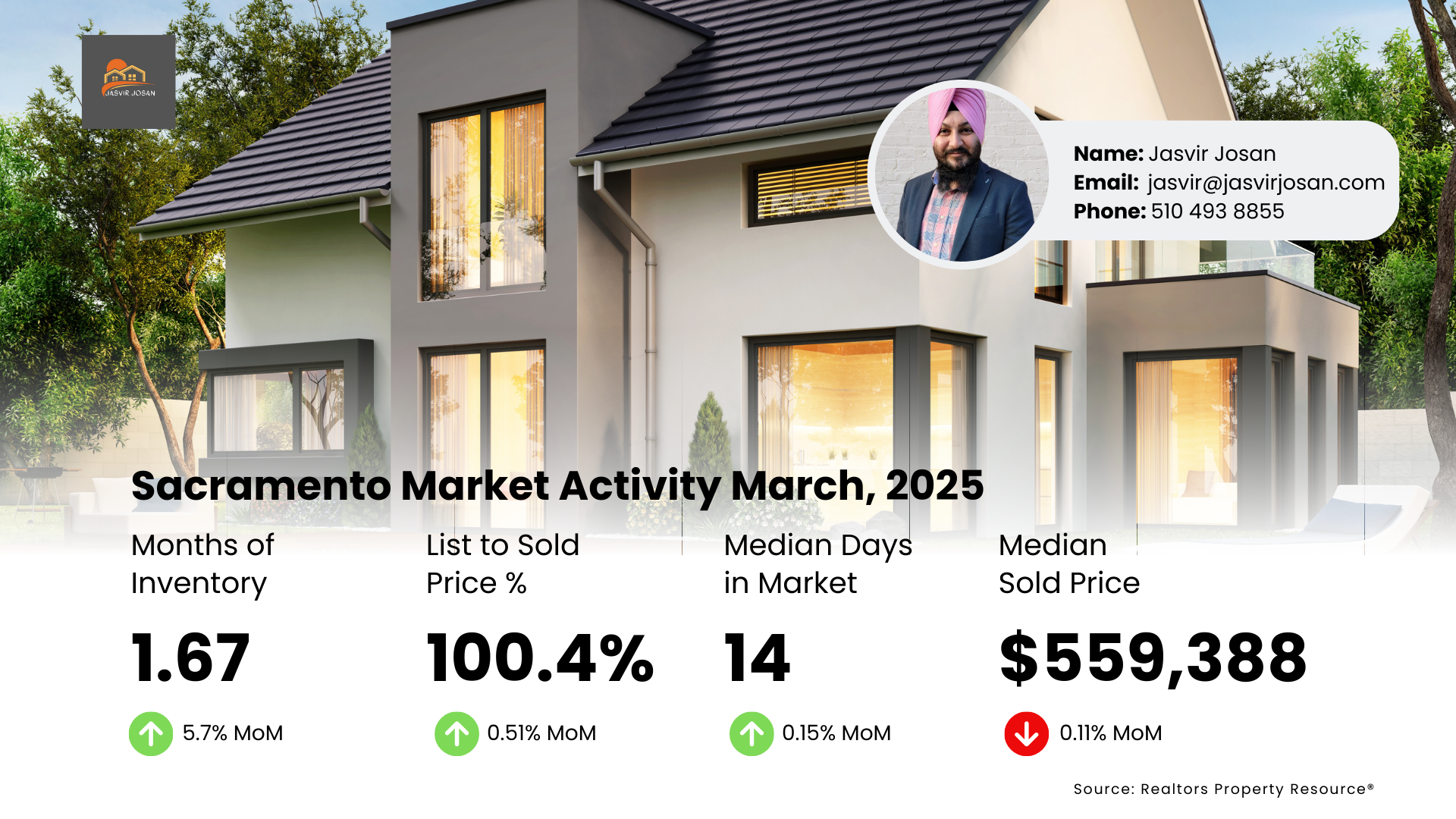
The Sacramento real estate scene in March 2025 is painting an interesting picture. We're seeing a subtle shift with a touch more homes hitting the market, but don't let that fool you – it's still a fast-paced arena where knowing the latest stats is your winning strategy.

Let's dive into the key indicators for March:

  • Months of Inventory: 1.67 (Up 5.7% MoM)
    • We're seeing a slight increase in the number of homes available for sale compared to last month. While this offers a bit more breathing room for buyers, inventory levels are still relatively low, indicating that the market remains competitive.
  • List to Sold Price %: 100.4% (Up 0.51% MoM)
    • This continues to be a significant data point. On average, homes are selling for slightly above their listing price. This underscores the ongoing demand in the Sacramento area and suggests that well-priced homes are still attracting strong interest and potentially multiple offers.
  • Median Days in market: 14 (Up 0.15% MoM)
    • The pace of the market remains swift. With a median of just 14 days on the market, properties are moving quickly. This reinforces the need for buyers to be prepared to act decisively when they find a home that meets their needs.
  • Median Sold Price: $559,388 (Down 0.11% MoM)
    • Interestingly, we've seen a very slight dip in the median sold price compared to February. While this could indicate a minor shift, it's important to consider this within the context of the other indicators. Overall, prices remain strong, and this small decrease could be attributed to various factors, including the mix of properties sold during the month.

What Does This Mean for Buyers and Sellers?

  • For Buyers: While the slight increase in inventory is a welcome sign, the market is still competitive. Be prepared to act quickly, have your financing in order, and work closely with an experienced agent who can help you navigate multiple-offer situations. The fact that homes are selling above list price highlights the importance of a strong offer strategy.
  • For Sellers: You continue to be in a favorable position. Homes are selling quickly and at or above asking price. However, it's crucial to price your home strategically based on current market conditions and work with an agent who can effectively market your property to attract the right buyers.

Navigating the Sacramento Market

The Sacramento real estate market continues to evolve. Staying informed about these trends is crucial for making sound decisions. As your local real estate expert, I'm committed to providing you with the most up-to-date information and guidance.

Whether you're looking to buy, sell, or simply have questions about the market, I'm here to help. Don't hesitate to reach out!

Posted in Market Updates
April 16, 2025

Feeling Stuck? 5 Reasons a Move Could Change Everything

elk grove homes for sale, elk grove homes for sale 95758, mountain house homes for sale new, elk grove homes for sale with pool, sacramento homes for sale, sacramento homes for sale with inlaw quarters,  sacramento homes for sale 95608, california moves, auburn homes for sale, auburn homes for sale, stockton homes for sale, tracy homes for sale, orangevale homes for sale, carmichael homes for sale

Change is the only constant in life and sometimes the change allows the living situation to transform into something different. So, while packing boxes and house hunting can be a chore, there are clear signs that a move could be the best for your future. If this year has left you feeling unsettled or you find these top 5 reasons resonate with you, it may just be time to consider a broader horizon.

1. Your Current Home No Longer Meets Your Needs:

This is by far the most popular cause of relocations. Life is evolving, and so it should move with your home. The family has grown, and there could be a demand for extra bedrooms. Maybe you're an empty-nester looking for a less burdened lifestyle. Your current home may not be equipped with what you need above, such as a home office, a bigger kitchen, or an outside space for your furry friend. If you always find yourself fantasizing about changes that your current abode can't give you, it's very much likely to be that time when you consider moving.

2. You Are Having a Major Life Change:

Sometimes, life throws surprises, the greatest of which require a change of the address. Events such as a new job in another state, marriage or divorce, or even a new baby are life-changing and could warrant a relocation. At times the new work premises are the only reason you are supposed to change houses, but in other cases, the house should be made to suit a different lifestyle. Do embrace these changes and allow them to bring you to a better living situation.

3. Your Neighborhood Isn't a Good Fit Anymore: 

Neighborhoods change over time. It used to be a quiet family-oriented neighborhood; it now becomes noisy or unsafe. Or maybe, that local facility you used to have no longer has access. If the latter is increasingly disconnected from the neighborhood, or the quality of your life seems to decrease at the very thought of being there, then a change of scenery may well suit you.

Related: Navigating the Home Buying Process: Tips for First-Time Buyers

4. Financial Opportunities or Pressures:

Moving houses occasionally happens when one feels financially constrained, especially on living expenses, and thus would look for a place within a certain area that is cheaper. Or location, better jobs are the opposite of that; perhaps they can leave you with a sudden financial blessing and make you want more luxurious living arrangements. Either way, financial decision making plays a huge role in most change of residence decisions.

5. You're Craving for a Fresh Start: 

Sometimes, it is just a place for a change. You might feel stagnant and need a fresh start. Different locations may bring new experiences, new people, and even different ways of thinking. If you have been feeling restless and uninspired, this may just be the time to relocate and shake up your life.

Moving is not a small decision, but it is something that can be a good, even great, experience. If you recognize these signs, it will allow you to make an informed decision about where you would like to find a home that suits your needs and desires. Don't hesitate to check out all options and open yourself up to new possibilities that a change in your locale can bring.

Ready to explore your options?

If you're feeling any of these signs and think it might be time to move, don't wait! Contact us today for a no obligation consultation. We can help you assess your needs, explore potential locations, and navigate the entire moving process. Let's find you the perfect home for your next chapter!

Posted in Homeowner Tips
April 9, 2025

Demystifying the Home Inspection: A Guide for Buyers and Sellers

How home inspections work, checklist for buyers and sellers, and negotiation tips during escrow

The home inspection is one of the most critical turning points in any real estate transaction, frequently causing a bit of anxiety for both buyers and sellers alike. However, looking at the inspection as a diagnostic health check rather than an obstacle, removes the stress from the equation.

Understanding exactly how the process works, allows everyone at the closing table to protect their interests, manage financial expectations, and proceed toward a smooth, successful closing. Let's look closely at how a professional home inspection works and why it matters to your bottom line.


What Exactly is a Home Inspection?

A home inspection is an exhaustive, non-invasive visual examination of a property's major structural elements, safety features, and mechanical systems. Performed by a certified professional, the inspector systematically evaluates the operational health of several key components:

  • Structural Framework: The visible foundation elements, grading, roof framing, structural walls, and crawlspaces.
  • Electrical Infrastructure: The main service panel capacity, circuit breakers, grounding, wiring safety, and GFCI outlet functionalities.
  • Plumbing Networks: Supply and drain lines, main shut-off valves, functional water pressure, and the age or condition of the water heater.
  • HVAC Systems: Operational checks of the heating, ventilation, and air conditioning units, including ductwork integrity and airflow.
  • Roofing & Exterior Perimeters: Shingle lifespan, flashings, chimney conditions, gutters, siding materials, and exterior door seals.
  • Built-In Major Appliances: Ovens, ranges, built-in microwaves, garbage disposals, and dishwashers.

Related: Appraisal vs. Inspection: What's the Difference and Why Do You Need Both?


The Real Estate Inspection Matrix

Once the inspection report is completed, issues are generally sorted into distinct actionable steps during transaction negotiations:

Defect Classification Typical Examples Standard Resolution Strategy
Safety & Code Hazards Exposed live electrical wires, active gas leaks, localized mold growth. Sellers almost always repair these immediately or face underwriting lending blocks.
Major System Failures Cracked heat exchanger, failed roof line, cracked foundation base. Resolved via contract price reductions, closing cost credits, or licensed contractor repairs.
Minor Deferred Maintenance Torn window screens, sticky doors, old carpets, minor paint chips. Usually noted for the buyer's future home records; rarely negotiated for seller credits.

The Inspection Journey: A Step-by-Step Walkthrough

  1. Activating the Contingency: Typically, a buyer coordinates the home inspection immediately after an offer is formally accepted. The purchase agreement contains an inspection contingency period, usually giving the buyer 7 to 17 days to finish testing.
  2. The On-Site Assessment: The inspector reviews the asset over 2 to 4 hours, documenting discoveries with notes and detailed photographs. Buyers are highly encouraged to attend the final hour of the walkthrough to receive direct feedback.
  3. Reviewing the Digital Report: Within 24 to 48 hours, the inspector delivers a categorized report detailing safety items, material defects, and deferred maintenance alerts.
  4. Negotiation Strategy: Relying on the report, buyers can compile a Request for Repairs. Sellers can choose to execute the repairs, offer a financial credit at closing, lower the sale price, or decline the request.
  5. Contingency Clearance: Once both sides reach a formal, signed agreement on repairs or financial credits, the inspection contingency is officially waived, moving the transaction closer to settlement.
💡 Pro Tip for Buyers: Focus on the big items. No home is flawless—even brand-new builds will show minor issues on an inspection report. Focus your negotiation power on structural integrity, safety hazards, and major mechanical longevity rather than cosmetics.

Strategic Value for Both Sides of the Escrow

For Smart Buyers:

  • Informed Financial Planning: You gain a transparent baseline look at the property’s physical health, removing expensive guesswork before final paperwork is signed.
  • Legitimate Contractual Leverage: The structural report provides real data for requesting closing cost credits or price adjustments.
  • Preventing Post-Close Regrets: Pinpointing underlying failures beforehand saves you from encountering massive, unexpected repair bills right after moving in.

For Proactive Sellers:

  • Eliminating Closing Delays: Ordering a pre-listing home inspection allows you to address hidden defects before buyers ever step foot inside, preventing transactions from falling apart later.
  • Accurate Asset Pricing: Knowing the explicit physical condition of your structural systems lets you price your property accurately against current local market trends.
  • Minimizing Post-Sale Liability: Complete transparency upfront, paired with a certified independent report, helps insulate you from future legal claims regarding undisclosed defects.

Frequently Asked Questions Regarding Home Inspections

Does a home inspection determine if a property passes or fails?

No. A home inspection is an informational assessment of a property's current condition, not a pass/fail exam. The inspector does not issue a grade; they simply document their findings so the buyer can decide whether to move forward under the current contract terms.

What is the difference between a home inspection and a home appraisal?

A home inspection focuses exclusively on the structural and functional condition of the property to protect the buyer. A home appraisal determines the fair market value of the property to protect the mortgage lender's financial investment.


Navigating Your Transaction with Absolute Confidence

The home inspection phase is a natural, necessary step designed to bring clarity and security to your real estate transaction. By understanding how the inspection report is built and preparing an accurate negotiation strategy, both buyers and sellers can navigate escrow smoothly.

Are you preparing to make a move in the greater Sacramento region? Do not leave the physical health of your real estate investments up to chance. Whether you want to purchase a home in Roseville or maximize your equity in Elk Grove, our experienced team will guide you through the escrow process step by step. Contact our office today to schedule your initial consultation!

April 8, 2025

Mortgage Rates Dip, But Affordability Still Key!

Mortgage rates dip to 6.63 percent while housing affordability and inventory trends shift in Sacramento and Stockton

We are witnessing some incredibly interesting structural shifts in our regional housing landscape. If you have been keeping an active eye on buying a home in the Central Valley or greater Sacramento area, these real-time updates are exactly what you need to navigate the market safely and strategically. While there is highly welcome news regarding mortgage interest rates, understanding the larger affordability factors, remains key to making a smart investment move.


The Opportunity: A Welcome Dip in Mortgage Rates

Let's kick things off with the positive momentum: mortgage interest rates have recently taken a step downward! The standard 30-year fixed rate has adjusted to hover around 6.63%, representing a sharp 12-basis point drop. For active buyers, even a minor downward tick in interest rates translates directly into improved monthly purchasing power and lowered long-term borrowing overhead.

📈 Market Trends at a Glance:
  • 30-Year Fixed Mortgage Rate: Adjusted downward to hover around 6.63%.
  • National Supply Expansion: New listings jumped by 10% over the trailing month, driving active inventory up 28% year-over-year.
  • The Monthly Baseline: The average U.S. homebuyer's monthly housing liability remains historically elevated at $2,802.

The Reality Check: Housing Affordability Still Rules

While lower interest rates provide a phenomenal window of opportunity, maintaining clear budget discipline is absolutely necessary. Despite lower borrowing rates, greater economic factors keep baseline home payments historically high. In fact, real estate data shows that roughly 70% of households nationwide face challenges comfortably clearing underwriting thresholds for a standard $400,000 property without stretching their savings thin.

The Inventory Paradox

While it is fantastic news that new listings are up 10% and overall active options have expanded by 28% year-over-year, there is a catch. A significant portion of this fresh inventory is concentrated in mid-to-luxury categories. The highly sought-after, entry-level price brackets that first-time buyers rely on remain highly competitive, meaning strategy and local agent positioning are as important as ever.


Regional Highlights: Sacramento vs. Stockton Dynamics

Real estate is fundamentally hyper-local, and we are seeing very distinct behaviors playing out across our primary regional hubs:

Regional Market Median Sale Price Trend (YoY) Sales Volume & Inventory Speed
Sacramento County ▲ Up 1.9% Overall home sales volumes decreased by 1.9%, indicating tighter baseline options but resilient underlying values.
Stockton ▼ Down 2.0% Days on market are elongating, providing patient buyers with increased negotiation leverage and room to breathe.

These different numbers prove that you cannot rely on blanket national headlines. Buying in the steady appreciation zones of Sacramento requires a completely different tactical playbook than capitalizing on the buyer-friendly windows opening up across Stockton.


Strategic Action Steps for Local Buyers

  • Capitalize on Real-Time Purchasing Power: Utilize the recent interest rate softening to recalculate your borrowing parameters with your lender. A lower interest rate could allow you to successfully target homes that were previously just outside your budget.
  • Navigate Expanded Choices Carefully: Take advantage of the 28% year-over-year surge in active listings. Work closely with an agent to isolate homes that have sat on the market past the average lifecycle to negotiate repair credits or price reductions.
  • Budget for Absolute Sustainability: Rather than borrowing your maximum pre-approval limit, base your home purchase on a highly comfortable monthly mortgage payment that protects your emergency cash reserves.
  • Align with Local Market Masters: Because neighborhood trends are moving in completely different directions depending on the zip code, having hyper-local representation is your greatest competitive advantage.

Frequently Asked Questions

If inventory is up 28% year-over-year, why am I still seeing bidding wars?

Inventory growth is unevenly distributed. While the mid-to-high-end luxury segments are seeing substantial choices and sitting on the market longer, affordable entry-level homes and highly desirable neighborhoods remain sparse, keeping competition brisk for starter homes.

Should I wait for interest rates to drop further before buying?

Trying to time the bottom of the interest rate market can be risky. If rates drop significantly further, a massive wave of sidelined buyers will flood the market, which historically drives home prices upward due to intense competition. Buying now at a comfortable payment allows you to secure the asset today and refinance later if rates drop further.


Let's Work On Your Real Estate Game Plan

While shifting mortgage rates present an excellent entry window, keeping long-term affordability at the center of your decision-making ensures a safe, prosperous homeownership journey.

Thinking about navigating the shifting markets of Sacramento or Stockton? Let's turn market complexity into your personal advantage. Contact our local real estate experts today to map out your unique financial goals, assess your true buying power, and find the perfect home on your terms. Reach out to us today to schedule your private consultation!

Posted in Buyer Tips
April 2, 2025

Earnest Money vs. Due Diligence Money: What's the Difference?

Earnest money vs due diligence money, Earnest money refund California, Real estate earnest money Sacramento, Home buying earnest money, Contingency period California real estate, Difference between earnest and due diligence

Buying a home in Sacramento is an exciting journey, but it requires learning a completely new legal vocabulary. If you are researching real estate processes online, you might see nationwide terms like "earnest money" and "due diligence money" tossed around. However, real estate laws vary wildly by state. Let's break down exactly how these concepts work under a standard California Residential Purchase Agreement so you can protect your cash.

Earnest Money: Your Good Faith Deposit

In California, the Earnest Money Deposit (EMD) is the primary financial tool used to secure an offer. Think of it as a good-faith deposit showing the seller, you are fully committed to purchasing their property. It is typically 1% to 3% of the purchase price. Crucially, this money is never handed directly to the seller; it is held securely in an escrow account by a neutral third party, such as a local title company, until your transaction officially closes.

When is a California Earnest Money Deposit Refundable?

The standard California contract protects your deposit through explicit timelines called Contingency Periods. During these windows (the default is often 17 days), your earnest money is fully refundable if you walk away due to standard contractual protections:

  • Failed Physical Inspections: If a specialized Sacramento home inspection uncovers severe foundation, roof, or system issues that the seller refuses to fix or credit, you can cancel the contract and get your deposit back.
  • Financing Failure: If your mortgage lender denies your loan approval or interest rates spike unexpectedly, a standard loan contingency protects your upfront money.
  • Low Appraisals: If an independent appraisal determines the home's market value is lower than your agreed purchase price, you can renegotiate or exit the contract safely.

Once you officially sign documents to remove your contract contingencies, your earnest money becomes non-refundable. If you back out after contingency removal, the seller can legally claim your deposit as liquidated damages.

Due Diligence Money vs. The California Inspection Window

If you are reading real estate blogs from states like North Carolina or Texas, you will hear about "Due Diligence Money" or "Option Fees." In those markets, buyers write a small, completely non-refundable check directly to the seller just for the right to inspect the home.

How it works in California: California does not use a direct due diligence fee. Instead, you are given a Due Diligence Period (the inspection contingency window) automatically within the contract without having to pay a separate non-refundable fee to the seller. Your baseline commitment is covered entirely by your earnest money escrow deposit.

Key Takeaways for Local Homebuyers:

  • Earnest Money (EMD): Held in escrow, protects your commitment, and is fully refundable as long as you act within your active California contingency deadlines.
  • Due Diligence Fees: Paid straight to the seller's pockets and completely non-refundable from day one—but not utilized in standard California residential forms.

Navigating Your Contract with Confidence

Because missing an absolute contingency deadline can put thousands of your hard-earned escrow dollars at risk, working alongside an experienced professional is mandatory. Reviewing your purchase paperwork line-by-line ensures your timeline limits match your goals. If you are preparing to navigate the competitive Northern California marketplace, connect directly with a trusted Sacramento real estate professional to safely map out your buying strategy.

Frequently Asked Questions About Earnest Money in California

Is due diligence money required when buying a home in California?

No. Standard California residential real estate contracts do not utilize a non-refundable due diligence fee paid directly to the seller. Instead, buyers use an Earnest Money Deposit held in escrow, which is protected by defined contingency periods.

Can you get an earnest money refund in California?

Yes. An earnest money deposit is fully refundable to the buyer in California if they cancel the purchase agreement during their contractually specified contingency timelines for reasons like a failed home inspection, low appraisal, or loan denial.

What happens to earnest money after contingencies are removed?

Once a buyer formally signs the contingency removal forms in California, their earnest money deposit becomes non-refundable. If the buyer defaults on the purchase after this date, the seller typically retains the deposit as liquidated damages.

April 2, 2025

The Buyer's Dream: Your Guide to Irresistible Home Presentation

what buyers look for in a home, how to make my home desirable to buyers, how to create emotional connection with buyers, making buyers fall in love with your home, how to make buyers fall in love with your home staging, how to create a welcoming atmosphere for home buyers, how to stage your home to sell quickly and for top dollar, what are the most important things buyers look for in a home, how to improve curb appeal to sell your house fast, how to declutter your home for sale to maximize value, home staging tips elk grove, sell home fast sacramento

Selling your home isn't just a transaction; it's about creating an emotional connection. You want buyers to walk in and instantly envision themselves living there, making memories, and calling it their own. So, how do you make them fall in love? Here's a guide to creating that irresistible charm:

1. Declutter and Depersonalize: Create a Blank Canvas

  • Less is more: Start by ruthlessly decluttering. Remove personal items like family photos, excessive knick-knacks, and anything that might distract buyers from visualizing their own belongings in the space.
  • Neutralize: Aim for a neutral palette. Freshly painted walls in light, airy colors can make the space feel larger and more inviting.
  • Cleanliness is key: A spotless home is non-negotiable. Deep clean every nook and cranny, from baseboards to ceiling fans.

2. Stage for Success: Paint a Picture of Ideal Living

  • Highlight the best features: Arrange furniture to showcase the home's layout and highlight its best assets, like a cozy fireplace or a spacious living room.
  • Create inviting spaces: Set the dining table, fluff the pillows, and arrange fresh flowers to create a warm and welcoming atmosphere.
  • Appeal to the senses: Use subtle scents like vanilla or citrus to create a pleasant ambiance. Play soft, calming music during showings.

3. Enhance Curb Appeal: First Impressions Matter

  • Landscaping love: A well-maintained lawn, trimmed hedges, and colorful flowers can make a significant impact.
  • Front door finesse: A fresh coat of paint on the front door and new hardware can instantly elevate curb appeal.
  • Clean and tidy: Ensure the driveway, walkways, and porch are clean and free of debris.

4. Light It Up: Create a Bright and Airy Atmosphere

  • Maximize natural light: Open curtains and blinds to let in as much natural light as possible.
  • Layer lighting: Use a combination of ambient, task, and accent lighting to create a warm and inviting glow.
  • Replace outdated fixtures: Modern lighting fixtures can instantly update the look of a room.

Related: Unlock Spring Buyers: Why March is the Perfect Time to Sell

5. Showcase the Lifestyle: Let Them Envision Their Future

  • Highlight outdoor spaces: If you have a patio or backyard, create an inviting outdoor living area.
  • Showcase the neighborhood: Point out nearby amenities like parks, schools, and restaurants.
  • Tell a story: When showing the home, highlight its unique features and how they enhance daily life.

6. Little Details, Big Impact:

  • Fresh towels and linens: Crisp, clean towels in the bathroom and fresh linens on the beds can make a big difference.
  • Small upgrades: Replacing outdated hardware, light switches, and outlet covers can give the home a polished look.
  • Thoughtful touches: Leave a small welcome basket with local treats or a handwritten note for potential buyers.

7. Professional Photography: Capture the Magic

  • High-quality images: Invest in professional real estate photography to showcase your home in its best light.
  • Virtual tours: Consider creating a virtual tour to allow buyers to explore the home from the comfort of their own homes.

The Emotional Connection:

Ultimately, making buyers fall in love with your home is about creating an emotional connection. It's about showcasing the lifestyle and helping them envision themselves living there. By focusing on creating a clean, inviting, and well-staged space, you can increase your chances of a successful sale.

Final Thought:

Remember, buyers aren't just buying a house; they're buying a home. Help them fall in love with the possibilities.

Ready to make buyers fall head over heels for your property? Don't navigate the selling process alone. Contact us today for expert guidance on staging, marketing, and closing the deal. We can help you create that irresistible appeal and get top dollar for your home. Schedule a consultation and let's turn your home into a buyer's dream!

Posted in Homeowner Tips
March 26, 2025

Maximize Your Investment: Top Renovation Projects for Home Value

Thinking about renovating your home? It's a fantastic way to personalize your space and increase its market value. But not all renovations are created equal. Some offer a significant return on investment (ROI), while others might not be worth the effort. Let's explore the best renovation projects that can add real value to your home.

1. Kitchen Remodel: The Heart of the Home

  • Why it adds value: A modern, functional kitchen is a major selling point. It's where families gather and memories are made.
  • High-ROI projects:
    • Update outdated cabinets with fresh paint or new hardware.
    • Install new countertops (quartz or granite are popular choices).
    • Upgrade appliances to stainless steel, energy-efficient models.
    • Consider a stylish backsplash and updated lighting.
  • Tip: Focus on creating a clean, bright, and open space.

2. Bathroom Renovations: Spa-Like Appeal

  • Why it adds value: A well-designed bathroom can significantly enhance a home's appeal and comfort.
  • High-ROI projects:
    • Replace outdated fixtures (faucets, showerheads, toilets).
    • Install new tile flooring and shower surrounds.
    • Add a double vanity or a larger shower/tub.
    • Improve lighting and ventilation.
  • Tip: Aim for a modern, spa-like feel.

3. Adding or Enhancing Outdoor Living Spaces

  • Why it adds value: Outdoor spaces extend your living area and appeal to buyers who love to entertain or relax outdoors.
  • High-ROI projects:
    • Build a deck or patio.
    • Install a pergola or shade structure.
    • Create a fire pit or outdoor kitchen.
    • Enhance landscaping with low-maintenance plants.
  • Tip: Consider your climate and create a functional, inviting space.

4. Boosting Curb Appeal: First Impressions Matter

  • Why it adds value: Curb appeal creates a positive first impression and can significantly impact a buyer's decision.
  • High-ROI projects:
    • Replace old siding or paint the exterior.
    • Upgrade the front door and garage door.
    • Enhance landscaping with well-maintained lawns and gardens.
    • Install new outdoor lighting.
  • Tip: Focus on creating a clean, well-maintained, and welcoming appearance.

5. Flooring Upgrades: Foundation for Value

  • Why it adds value: New flooring can transform a space and make it feel fresh and modern.
  • High-ROI projects:
    • Replace worn carpets with hardwood or luxury vinyl plank.
    • Refinish existing hardwood floors.
    • Install tile in bathrooms and kitchens.
  • Tip: Choose durable, stylish flooring that complements your home's style.

Related: From Cluttered to Captivating: Your Home's Pre-Sale Makeover

Important Considerations:

  • Budget: Set a realistic budget and stick to it.
  • Local market: Research what buyers in your area are looking for.
  • Professional help: Hire qualified contractors for major projects.
  • ROI: Focus on projects with a high return on investment.

Conclusion:

Renovating your home can be a rewarding experience, both personally and financially. By focusing on projects that add real value, you can create a space you love and increase your home's market appeal. Remember to prioritize projects that align with your budget and the needs of your local market. Happy renovating!

Posted in Homeowner Tips