Headlines love to tell you where the housing market was last month, but by the time unemployment statistics hit the evening news, the real estate market on your street has already shifted! Public economic data is almost always a lagging indicator.
If you want to know what is actually happening to your home's value, you have to look closer to home. In my years working with buyers and sellers across Sacramento and Elk Grove, I have learned that macro-level numbers rarely tell the full story. Local employment trends hit neighborhoods differently, and the early warning signs show up long before broad property values start to drop.
The Hidden Early Warning Sign: What Happens Before Prices Drop
When local job losses begin to mount, most people expect home prices to drop straight down immediately. That is simply not how real estate works on the ground!
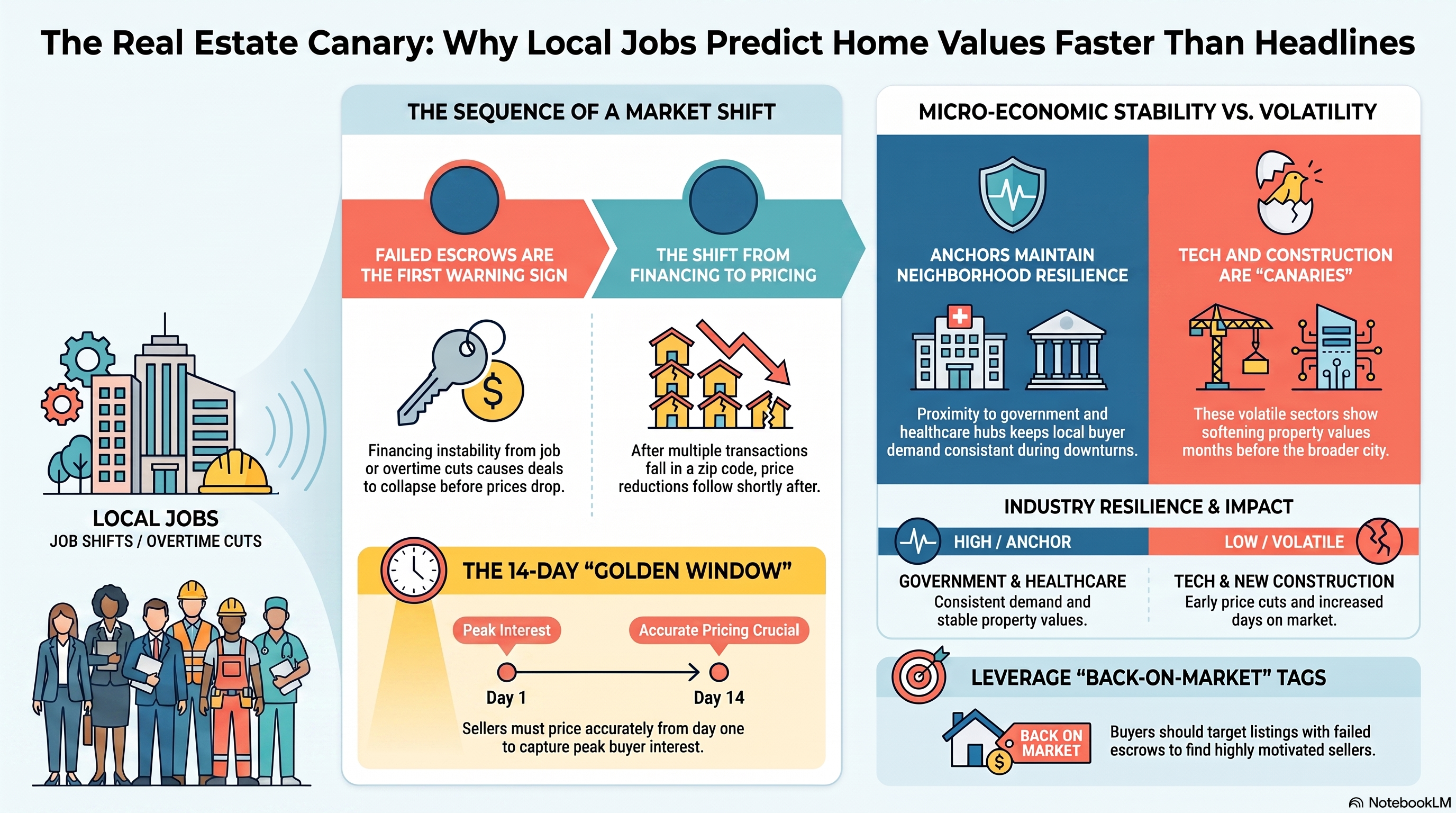
Price drops are actually a secondary reaction. The very first indicator that job cuts are impacting home values is a sudden wave of failed escrows due to financing issues.
The Immediate Impact on Active Escrows
Weeks before inventory rises or listing prices decline, active deals start falling apart. A buyer loses a job mid-transaction, or their employer cuts overtime, disqualifying them from their mortgage at the eleven-hour mark.
When I notice multiple transactions failing across a zip code within a short window, I know the local market is shifting! Once financing instability sets in, price reductions follow shortly after, starting with homes that were already stretching the upper limit of neighborhood values.
How Micro-Economies Shape Neighborhood Values
Not all jobs carry the same weight when it comes to housing stability. A national recession might dominate the news, but your neighborhood’s resilience depends on who employs your neighbors.
In the greater Sacramento area, we see this play out constantly across our distinct regional industries.
Government and Healthcare: The Resilient Factors
Sacramento is anchored by state government, major healthcare networks, and higher education. These sectors provide extraordinary stability!
When economic uncertainty hits, government offices do not close overnight, and hospitals keep operating. As a result, neighborhoods situated near major state facilities or medical centers tend to hold their value remarkably well. Even during broader downturns, steady employment in these anchor industries keeps local buyer demand consistent.
Tech and Construction: Where Volatility Shows Up First
On the flip side, volatile industries act as the canary in the coal mine for real estate. Over the last few years, tech migration from the Bay Area and new home construction have driven significant growth in our outer suburbs.
When tech companies freeze hiring or construction slows down, those specific suburban pockets feel it immediately. Days on market stretch out. Price cuts multiply! A layoff spike in a single localized industry can soften property values in specific subdivisions months before the broader city feels a ripple.
Strategic Advice for Homeowners and Sellers
If local job losses are creeping up and you need to sell your home, your strategy must pivot immediately. Hope is not a pricing strategy!
Capitalizing on the Golden Window
When buyer confidence weakens, overpricing your home is the most dangerous risk you can take. You must hit the market with sharp, aggressive pricing and flawless presentation right out of the gate.
I coach my sellers to focus on the "golden window"—those first two weeks on the market when buyer interest peaks. If you price accurately from day one, you capture serious buyers before they start worrying about market shifts. Testing the market with an inflated price leads to lingering listings, repeated price cuts, and ultimately selling for less than you would have received with a smart upfront price.
Smart Tactics for Buyers in an Uncertain Market
Rising local unemployment creates uncertainty, but for disciplined buyers, it also unlocks immense opportunity. You just need to know where to look and how to structure your offers!
Leveraging Days on Market and Failed Escrows
When job numbers fluctuates, buyers should look for homes with high days on market or listings that recently returned to the market after a failed escrow. A back-on-market tag often signals a seller whose previous buyer suffered financing issues—meaning that seller is now highly motivated to close.
As a buyer in this environment, you should protect yourself with clean financing contingencies and strict personal price thresholds. Expect more room for negotiation, ask for seller concessions, and take your time finding a property that offers long-term stability.
Protecting Your Real Estate Equity
Understanding how your local economy impacts your property value allows you to make proactive, intelligent decisions rather than reactive ones. Whether you live near stable government centers or in expanding suburban developments, keeping an eye on local employment trends is the best way to safeguard your equity.
- Monitor local industry news rather than just national headlines.
- Watch for shifts in neighborhood inventory and days on market.
- Work with a local real estate professional who understands micro-market trends.
If you are curious about how recent economic changes have impacted the value of your home in Sacramento or Elk Grove, do not rely on automated online estimates! Reach out to me today for a custom, localized market analysis designed to give you clarity and confidence in today's housing market.